Democracy's Legitimacy Problem Isn't Going Away
From protest crackdowns to abortion pills to statues of heroes no one agrees on—Washington and London are both trying to govern without consensus. That's a recipe for something worse than gridlock.
The Prime Minister of Britain just told the BBC that sometimes protests need to be stopped. Not managed. Not regulated. Stopped. In the same breath, he’s worried about the “cumulative effect” of marches on one community, while Green Party leaders are apologizing for seeming to back criticism of police, and a former Tory PM is warning that constant leadership turnover is letting young people down because nobody’s focused on actual problems anymore.
Meanwhile, in Washington, the Supreme Court is being asked to restore access to an abortion pill while a federal appeals court just froze its expansion. The President-elect is planning a statue park along the Potomac featuring 250 “heroes”—a list that, I guarantee you, half the country will think is insane. And the Defense Department just fast-tracked $8.6 billion in weapons deals to the Middle East without bothering with congressional review, while the new defense secretary and a Democratic congressman are still litigating the Iraq War through cable news because they both fought there and came to opposite conclusions.
None of these things are accidents. They’re symptoms.
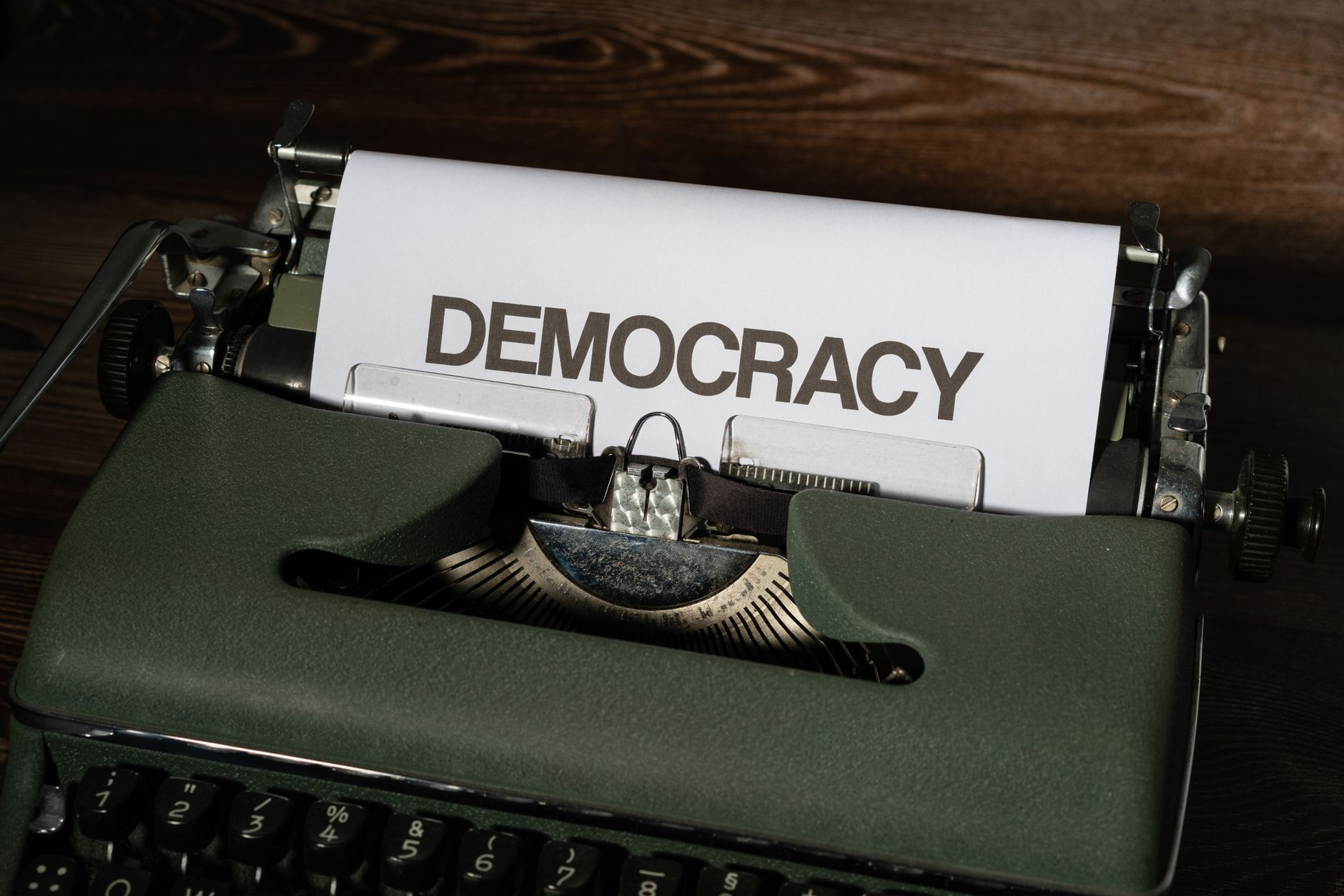 Photo by Markus Winkler / Pexels
The Consensus Broke
Here’s what’s actually happening: both democracies are trying to govern without any agreement on the fundamentals. Not just policy disagreements—those are normal. I’m talking about baseline agreement on what the rules are, who decides, and whether the other side is legitimate.
In Britain, Sir Keir Starmer is a guy trying to stabilize a country that’s exhausted by change. His interview with the Today Programme touched on everything: wars, antisemitism, domestic chaos. The subtext is: I’m the grown-up in the room. But when you’re suggesting that protests might need to be shut down because they’re upsetting one constituency, you’re not being the grown-up. You’re being a manager of tensions instead of a resolver of them. That’s different. That’s weaker.
John Major’s warning about prime ministers changing hands is correct on the merits—long-term thinking does suffer when you’re in constant leadership churn. But his real problem isn’t the churn itself. It’s that the British political system no longer has enough shared purpose to keep anyone in office for long. When you don’t agree on what you’re trying to do, you blame the person trying to do it.
The U.S. is further down this path. You’ve got the Supreme Court and the FDA having a technical argument about abortion pills, except it’s not really technical—it’s theological and political and it’s being litigated in the federal courts because elected politicians can’t agree on the answer. That’s what happens when the legitimacy of institutions gets questioned: you end up fighting in the courts instead of negotiating in legislatures.
And Trump’s statue park? I think this is actually the most revealing thing. He wants 250 life-size statues of American heroes. Not to honor the people—though that’s the stated reason. To reshape the national mythology. To say: here’s what America is. The fact that you could build that same park and fill it with 250 completely different names depending on your politics isn’t a bug. It’s what happens when you lose a shared national story.
 Photo by Andrew Neel / Pexels
The Weapons Deal and the Iraq Debate
Watch how Hegseth and Moulton are still fighting about Iraq. They both served there. They saw the same war. And they came to opposite conclusions about what it meant and what comes next. That’s not unusual—soldiers disagree about wars. But what’s new is that disagreement now shapes whether we do arms deals, who we arm, and whether Congress gets to know about it first.
The State Department just moved $8.6 billion in weapons to Persian Gulf countries and Israel without congressional review. That’s not normal procedure, and it happened because the current administration doesn’t trust Congress to agree with it. So instead of fighting it out publicly, they routed around it.
This is the pattern I’m noticing: when institutions lose legitimacy, you stop using them. You stop negotiating. You stop pretending the other side has a point. You just route around them.
The PM suggesting protests might need to stop. The appeals court freezing abortion pill access while the Supreme Court gets asked to unfreeze it. The Pentagon bypassing Congress. These aren’t isolated decisions. They’re what governance looks like when half the country thinks the other half shouldn’t be allowed to win.
What This Actually Means
Here’s my honest take: I don’t think either country is headed for a coup. But I do think you’re watching the slow-motion collapse of procedural legitimacy. When people stop believing in the process itself—the courts, Congress, Parliament, the electoral system—they stop using it the way it’s supposed to be used.
The Polanski apology over the police criticism is a tiny thing, but it’s indicative. Green Party leadership got blowback for appearing to validate criticism of law enforcement in a specific incident, so they backed off. That’s not politics. That’s fear. When political leaders are afraid of their own base disagreeing about facts on the ground, you’ve got a legitimacy problem.
My prediction: we’re going to see more and more of this. More routing around institutions. More “emergency” measures that bypass normal procedure. More attempts to reshape the narrative wholesale (statues, monuments, textbooks) because persuasion feels impossible.
The genuinely uncertain part is what breaks the deadlock. Could be a shock—a recession, a war that changes the stakes, a leader who actually rebuilds consensus instead of managing around it. Or it could be that both countries muddle through for another decade, getting progressively more exhausted, until something gives.
What I’d bet on: the institution that breaks first will be one nobody’s paying attention to. Not Parliament or Congress. Maybe local government, or the civil service, or the courts at the mid-level where actual decisions get made. When people stop believing in the process, they don’t always storm the palace. They just quietly stop cooperating with the machinery.
 Photo by Tara Winstead / Pexels
What I’m Watching
-
Scottish Holyrood election results and what they say about devolution trust. Glenn Campbell’s analysis suggests Scots are still engaged with their Parliament, which is the one part of UK politics still generating real enthusiasm. If that cracks—if trust in Holyrood falls below trust in Westminster—you’ve got a territorial legitimacy crisis on your hands.
-
Whether the Supreme Court actually rules on the abortion pill case, and how quickly. If they jump in and overturn the appeals court, that’s an institution asserting power in a high-stakes situation. If they punt or move slowly, that’s an institution avoiding legitimacy questions. Either way, watch what happens in swing states afterward.
-
How many times the Pentagon uses this $8.6 billion precedent to bypass Congress in the next 18 months. This is the tell. If it’s one-off, maybe it was really an emergency. If it becomes routine, you’re watching institutional bypass become policy.
-
Whether any politician actually tries to build consensus across a divide, or if they all just keep optimizing for their base. This sounds vague, but it’s the most important thing. A single example—someone actually changing a voter’s mind about something fundamental—would suggest the game’s not completely over. Right now I don’t see it happening.