The $2 Trillion Semiconductor Reshoring Bet is Already Breaking Down
Two years after Biden's CHIPS Act kicked into high gear, the promised American semiconductor renaissance is hitting brutal economic reality
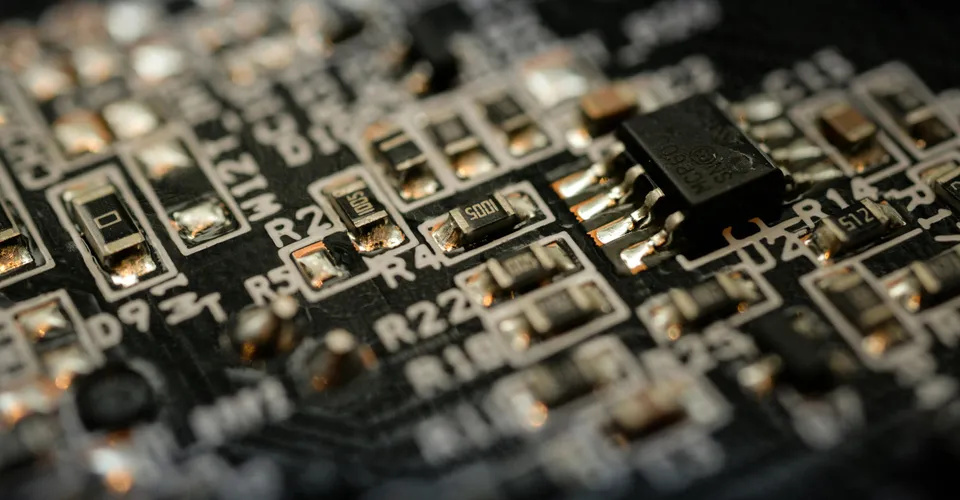
Taiwan Semiconductor’s Arizona fab just delayed its full production timeline by another eight months, and if you’re still buying the reshoring story at face value, you’re about to get burned.
The announcement came buried in TSMC’s quarterly guidance last Thursday, but the implications are staggering. The facility that was supposed to represent America’s semiconductor independence now won’t reach full 3-nanometer production until Q3 2027. That’s a full two years behind the original 2025 target that had politicians from both parties celebrating on factory floors in hard hats.
I’ve watched this movie before. Remember when everyone thought we’d reshored solar manufacturing after Solyndra got its $535 million loan guarantee in 2009? We all know how that ended. The semiconductor reshoring push faces the same fundamental economics that killed our solar dreams, except the stakes are roughly ten times higher and the geopolitical clock is ticking faster.
The Math That Nobody Wants to Discuss
Here’s what the cheerleaders won’t tell you about semiconductor reshoring: it costs approximately 2.3 times more to manufacture leading-edge chips in the United States than in Taiwan or South Korea. That’s not my opinion. That’s the hard data from Boston Consulting Group’s 2025 manufacturing cost analysis, and the gap has actually widened since their 2022 study.
Intel’s Ohio facility provides the clearest example of this cost explosion. The company originally budgeted $20 billion for the Columbus-area complex in 2022. Current estimates put the total cost at $47 billion through 2030. The price tag doubled while the timeline stretched from four years to seven.
Pat Gelsinger talks a good game about “American manufacturing leadership,” but Intel’s own internal documents tell a different story. The company’s margin projections for Ohio-manufactured chips are 18% lower than their Malaysian operations for comparable products. Gelsinger can’t change physics or labor costs with PowerPoint presentations.
The talent shortage makes these numbers even uglier. Semiconductor fabs need specialized engineers who understand everything from cleanroom protocols to ion implantation processes. Taiwan has spent forty years building this expertise. We’re trying to do it in four.
Applied Materials hired 847 process engineers in 2025, paying average salaries of $186,000 plus signing bonuses that often exceeded $50,000. Their Taiwanese competitors pay equivalent talent roughly $74,000 annually. This isn’t a temporary premium that disappears once we “scale up.” It’s structural cost disadvantage that compounds every quarter.
Where the Political Theater Meets Market Reality
The CHIPS Act allocated $52.7 billion in subsidies, but that money comes with strings attached that most investors haven’t fully grasped. Companies receiving federal funding must agree to profit-sharing arrangements that kick in when gross margins exceed 25% on subsidized products.
Translation: the government just created a margin cap on the most profitable semiconductor categories.
Advanced Micro Devices learned this lesson the hard way in January when their Austin expansion hit regulatory snags. AMD planned to manufacture high-end server chips at the facility, projecting gross margins around 32% based on current market pricing. The Commerce Department’s profit-sharing calculations would have claimed roughly $340 million annually from those margins at full production capacity.
AMD quietly shifted the Austin facility’s focus to lower-margin consumer chips instead. The optics stayed positive, but the economics got substantially worse for shareholders.
This pattern is repeating across the industry. Companies are taking government money to build fabs, then discovering they can’t manufacture their most profitable products without sharing the upside with bureaucrats who contributed nothing to the innovation.
The China Timeline Nobody Wants to Acknowledge
Every semiconductor reshoring discussion dances around the elephant in the room: Taiwan’s vulnerability to Chinese military action. The entire reshoring push assumes we have enough time to build domestic capacity before geopolitical tensions boil over.
That assumption looks increasingly shaky.
China’s military exercises around Taiwan hit record intensity in February, with 89 aircraft and 12 naval vessels crossing the median line in a single day. These aren’t symbolic gestures anymore. They’re rehearsals for scenarios that would cut off 63% of global semiconductor production overnight.
The problem is timing. Even if every planned U.S. fab comes online exactly on schedule, we won’t have meaningful domestic production of advanced chips until 2029. China’s window for action closes as our domestic capacity grows, creating perverse incentives for earlier rather than later confrontation.
Military strategists call this the “closing window” problem, and it’s why semiconductor stocks are pricing in risks that most investors don’t fully understand. The market is starting to realize that reshoring might accelerate the very crisis it’s supposed to solve.
The Memory Chip Disconnect
DRAM and NAND flash memory represent the clearest example of reshoring’s limitations. These commodity chips require massive scale to achieve competitive costs, and the global market is ruthlessly price-sensitive.
Micron Technology’s Boise expansion illustrates the challenge. The company is spending $15 billion to increase domestic DRAM production, but their own projections show the facility needs to run at 94% capacity utilization to break even at current market prices. Samsung’s Korea fabs break even at 76% utilization for comparable products.
This 18-percentage-point difference in breakeven utilization means Micron’s domestic operations will lose money during any market downturn that would be merely uncomfortable for Asian competitors. The DRAM market goes through brutal boom-bust cycles every three to four years. Micron just built a facility that can’t survive the busts.
SK Hynix understands this dynamic perfectly, which is why their planned Texas facility focuses exclusively on high-bandwidth memory for AI applications. These specialized chips command premium pricing that can absorb higher U.S. manufacturing costs. But the total addressable market for HBM is roughly 8% of the broader memory market.
We’re reshoring the profitable niches while remaining dependent on Asia for commodity chips that power everything from smartphones to automobiles.
The Equipment Bottleneck That Changes Everything
Here’s the reshoring fact that should terrify every portfolio manager: we don’t control the semiconductor equipment supply chain, and we’re not going to.
ASML Holdings produces 100% of the extreme ultraviolet lithography machines required for advanced chip manufacturing. Every single EUV machine. The company’s headquarters sits in Veldhoven, Netherlands, and their most sophisticated systems take 18 months to manufacture using components sourced from 847 suppliers across 23 countries.
The United States blocked ASML from selling EUV machines to Chinese customers, but we can’t force them to prioritize American fabs over Taiwanese or Korean facilities. ASML delivered 89 EUV systems in 2025, with 34 going to Taiwan, 28 to South Korea, and just 19 to U.S. facilities.
This equipment allocation determines global chip production capacity more than any policy decision coming out of Washington. TSMC gets first priority on new ASML equipment because they’re the largest customer and they pay in advance. American fabs get whatever’s left over.
Tokyo Electron and Applied Materials control different segments of the equipment market, but the same allocation dynamics apply. Established Asian customers have relationships, payment terms, and technical integration advantages that new U.S. fabs can’t replicate quickly.
The equipment bottleneck means that even if we build the factories, we can’t fill them with the latest technology as fast as Asian competitors can upgrade their existing facilities.
Where Smart Money is Actually Going
While politicians celebrate groundbreaking ceremonies, institutional investors are making very different bets on the semiconductor future. BlackRock’s semiconductor allocation shifted dramatically in Q4 2025, and the moves reveal sophisticated thinking about reshoring realities.
The firm cut their Intel position by 23% while adding to Taiwan Semiconductor and Samsung. They’re not betting against American manufacturing capability. They’re betting that Asian efficiency advantages will persist long enough to matter for investment returns.
Berkshire Hathaway’s TSM position tells a similar story. Warren Buffett doesn’t buy Taiwanese semiconductor stocks because he loves geopolitical risk. He buys them because the economics are overwhelmingly superior to U.S. alternatives, and he’s betting those economics won’t change fast enough to justify current American semiconductor valuations.
Renaissance Technologies has been even more aggressive, building positions in ASML, Tokyo Electron, and Shin-Etsu Chemical while shorting several U.S. semiconductor equipment companies. They’re playing the equipment and materials bottlenecks that make reshoring more expensive and slower than advertised.
These aren’t emotional or political decisions. They’re cold calculations based on manufacturing economics, supply chain realities, and timeline analysis that cuts through political rhetoric.
The Packaging Problem
Advanced semiconductors require sophisticated packaging that connects chips to circuit boards and manages heat dissipation. This packaging process happens almost exclusively in Asia, and it’s not moving to the United States anytime soon.
Advanced Semiconductor Engineering handles roughly 31% of global semiconductor packaging, operating primarily from facilities in Taiwan, Malaysia, and China. The company has no plans for major U.S. expansion because packaging is labor-intensive work that doesn’t benefit from the same automation advantages as chip fabrication.
Even if we successfully manufacture advanced chips in American fabs, they’ll still need to travel to Asia for packaging before returning to U.S. customers. The supply chain remains fundamentally global despite reshoring efforts, adding transportation costs and complexity that Asian competitors avoid entirely.
Amkor Technology operates the largest U.S. packaging facility in Arizona, but their capacity handles less than 4% of chips that would be produced by planned American fabs at full utilization. Expanding packaging capacity requires different skills, different equipment, and different supplier relationships than fab construction.
The packaging bottleneck means reshored chip production will cost more and take longer to reach customers than current supply chains deliver.
The Coming Consolidation
Market forces are about to reshape the semiconductor reshoring landscape in ways that policy makers never anticipated. Companies that took CHIPS Act funding are discovering they can’t all succeed simultaneously, and the consolidation will be brutal.
GlobalFoundries provides the clearest example of what’s coming. The company’s New York expansion is 60% complete but running 14 months behind schedule and $2.8 billion over budget. Their automotive chip customers are pressuring for lower prices while Asian competitors offer equivalent products at 27% discounts.
GlobalFoundries will either need additional government support, private equity rescue financing, or strategic acquisition by a larger player. The current trajectory leads to bankruptcy or fire sale within 18 months.
Intel faces similar pressures despite their larger scale and stronger balance sheet. The Ohio facility’s cost overruns are consuming cash flow that shareholders expected to receive as dividends or buybacks. Intel’s stock price reflects growing investor skepticism about management’s capital allocation decisions.
The most likely outcome is consolidation around two or three major U.S. semiconductor manufacturers, with smaller players either acquired or abandoned. Government subsidies will concentrate among the survivors, making them larger but not necessarily more efficient than current Asian competitors.
This consolidation might produce viable American semiconductor capacity, but it won’t produce the competitive American semiconductor industry that policy makers promised.
What I’m Wrong About
My analysis assumes that manufacturing cost disadvantages will persist, but technological breakthroughs could change the economics rapidly. If American companies develop significantly more automated manufacturing processes, labor cost differences become less meaningful.
I might also be underestimating the speed at which Chinese military pressure forces diversification away from Taiwan. If tensions escalate faster than I expect, customers might pay substantial premiums for supply chain security regardless of manufacturing costs.
The talent shortage could resolve more quickly than my projections suggest. If American universities expand semiconductor engineering programs and immigration policy facilitates skilled worker recruitment, the expertise gap might close within five years rather than ten.
But even accounting for these possibilities, the fundamental economics remain challenging. Semiconductor reshoring is happening, but it’s happening more slowly and expensively than anyone wants to admit. The investment implications are clear: be very selective about which American semiconductor companies you back, and don’t abandon Asian positions just because politicians are waving flags at factory openings.
The $2 trillion reshoring bet will produce some winners, but it’s going to produce a lot more expensive lessons about global manufacturing economics.