The Capitol's Trust Problem Isn't Going Away
From Farage's £5m gift to Starmer's narrow escape, British and American politics are both rotting from the inside—and nobody's buying the explanations anymore
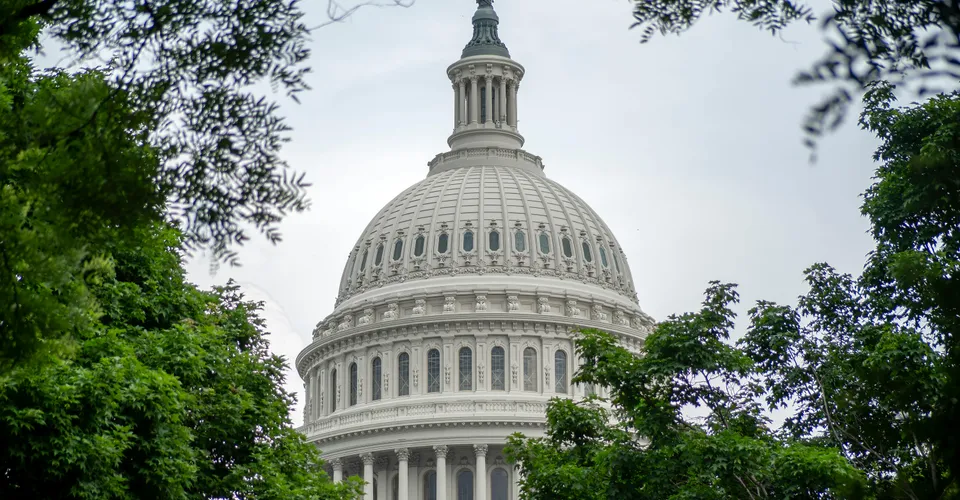
The Gift Nobody Wants to Talk About
Nigel Farage got £5 million from a donor. For personal security, he says. Before he became an MP, technically speaking, so maybe it doesn’t need declaring? The whole thing has that smell—you know the one. Not quite illegal. Definitely sketchy.
This is what passes for accountability in 2025.
 Photo by Ramaz Bluashvili / Pexels
Across the Atlantic, we’re watching the FBI director’s predecessor, James Comey, make his second court appearance over a social media post the Justice Department claims threatens the president. Meanwhile, six of nine Supreme Court justices—all appointed by Republicans—attended Trump’s state dinner together. The chief justice spent years lecturing everyone about the court staying above politics. Apparently that lecture didn’t stick.
The throughline here isn’t complicated: institutions are hemorrhaging credibility because the people running them keep getting caught doing things that make you go “why would you do that where people can see you?”
When Winning Isn’t Enough
Starmer won. He got Labour back into 10 Downing Street after 14 years in the wilderness. And yet he’s spent the last weeks burning political capital just to keep his own MPs from demanding an inquiry into whether he misled parliament about Peter Mandelson’s vetting process.
Think about that sentence for a second.
The prime minister won a general election. His party controls the House. And he’s still fighting to keep an inquiry at bay. He didn’t escape unscathed—that’s the polite way of saying it cost him. Real political cost. From his own side.
Badenoch, his Conservative opposite number, is hitting him on welfare and defence spending, which is what opposition leaders do. But the real damage to Starmer isn’t coming from her. It’s coming from the fact that voters—and his own backbenchers—don’t quite trust what he’s saying about what happened with Mandelson.
That’s the modern political death spiral. Winning the election doesn’t actually solve the trust problem. It just puts you in the position where you have to spend political capital you don’t have to defend decisions nobody asked you to explain in the first place.
 Photo by Andrew Neel / Pexels
The Pentagon’s 25 Billion Dollar Problem
Pete Hegseth, Trump’s defense secretary, stood before Congress and basically told skeptical lawmakers—from both parties—to shut up about the Iran war. The Pentagon’s cost estimate: $25 billion so far.
Here’s what struck me: a defense secretary “lashing out” at lawmakers asking questions about a $25 billion military operation is the kind of thing that used to disqualify you from the job. Now it’s just Tuesday.
The skeptics include Democrats and Republicans. That doesn’t matter to Hegseth. What matters is he’s in, the war’s on, and if you’re asking uncomfortable questions about whether it’s working or sustainable, you’re the problem—not the answers he won’t provide.
This is what institutional decay looks like from the inside. It’s not that nobody cares about oversight anymore. It’s that the people in charge treat it as an annoyance rather than a feature of the system.
The Leasehold Shuffle
Meanwhile, in what I can only describe as the Westminster version of watching paint dry, Matthew Pennycook says the government can’t actually abolish leasehold outright. The criticism that they’re dragging their feet? He’s rejecting that. Sure, fine, great.
Leasehold reform has been promised for years. Multiple prime ministers. Multiple housing ministers. It’s one of those policies that’s theoretically popular, technically fixable, and somehow always too hard to actually do. Pennycook’s answer amounts to: “Yeah, so, about that…”
This matters because it’s not about leasehold specifically. It’s about government’s capacity to deliver on things that require effort but don’t generate headlines. When they can’t—or won’t—it contributes to the broader sense that institutions promise things and deliver theater.
My Read on What’s Happening
I’ve covered Capitol Hill and Westminster long enough to know that trust doesn’t evaporate in a single scandal. It evaporates in the accumulation of small betrayals, each one explained away, each one defended with a line that doesn’t quite hold up.
Farage gets £5 million and there’s always a reason it doesn’t need declaring. Comey shows up in court over a social media post while six justices wave at a Trump dinner. The PM wins an election but can’t get his own party to stop asking questions about Mandelson. Hegseth tells Congress to pipe down about a $25 billion war. And leasehold reform? Too hard.
Here’s what I think: we’re watching the moment when institutions stop being able to explain their own behavior convincingly. Not because the behavior is necessarily criminal. But because it’s indefensible and everyone knows it.
The dangerous part isn’t the individual scandals. It’s the normalization. Farage’s £5 million becomes normal because nobody forces him to properly account for it. The six justices at the dinner become normal because the chief justice already spent his credibility on other things. Hegseth berating Congress becomes normal because nobody with actual power stops him.
My prediction: by summer 2025, we’ll see at least one major institutional figure resign or step back, not because they did something obviously illegal, but because they’ve run out of people willing to defend them. Not because the defense is impossible. But because everyone’s defense budget is already spent.
 Photo by Tara Winstead / Pexels
What I’m Watching
The Mandelson precedent: If Starmer survives this without fundamental damage to his authority, every future PM will know they can weather these kinds of questions by just burning backbench loyalty. Watch for whether Labour MPs stay in line when May’s local elections arrive. If those go badly, the pressure for a Starmer accountability moment returns immediately.
Hegseth’s Capitol Hill relationship: The defense secretary just picked a fight with both parties over a $25 billion war. Watch for whether that war request gets approved next quarter without substantive congressional pushback. If it does, you’ll know Congress has surrendered its oversight function. If it doesn’t, Hegseth’s actually got a problem.
Farage’s donor history: The £5 million gift raises a simple question: are there other gifts? Expect accountability pressure to build through spring 2025 if Reform gains any real electoral traction. Nothing kills a rising political movement faster than questions about where the money came from.
The Springfield Haitian timeline: Temporary Protected Status for Haitians expires on a specific date. That’s not a vague policy debate—that’s a concrete deadline when Haitian workers in Ohio face actual deportation. Watch to see if either party actually does anything about it, or if it just becomes a symbolic fight heading into 2026.
The real story here isn’t any single scandal. It’s that all of these things are happening simultaneously, nobody’s managing to explain any of them convincingly, and institutional authority is corroding in real time. That’s the pattern worth watching.