The Centers Can't Hold: Washington Fractures While London Burns
A PM struggles with protest, a Supreme Court guts abortion access, and Trump plans his own Mt. Rushmore. Meanwhile, everyone's fighting the last war.
The Moment When You Stop Governing
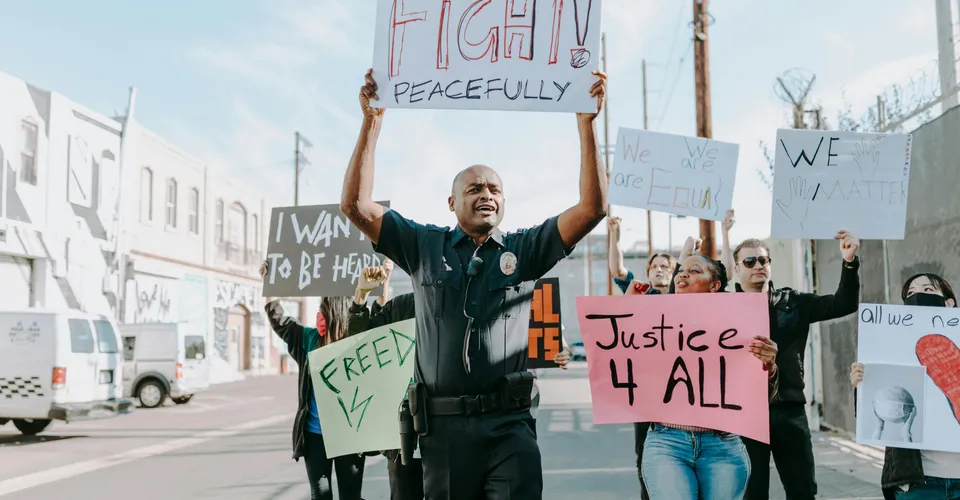
Sir Keir Starmer sat down with the BBC this week and basically said: we might need to stop some protests. Not all of them. Some of them. The ones that bother certain communities too much.
This is what happens when a Prime Minister has run out of actual answers.
He’s right that antisemitism marches have hit hard—the “cumulative effect” on Jewish communities is real and documented. But his solution isn’t enforcement of existing laws against hate speech or coordinated crackdowns on specific violent actors. It’s a vague suggestion that protests themselves, as a category of political expression, might need limiting. This is the move of someone who’s lost control of the narrative and is reaching for the lever marked “restrict freedoms.”
Meanwhile, his own Green Party leader just apologized for backing criticism of police for arresting antisemitic protesters. Polanski couldn’t quite commit to saying the arrests were wrong—he just wanted to back critics of the arrests without actually endorsing the position. It’s cowardice dressed up as nuance.
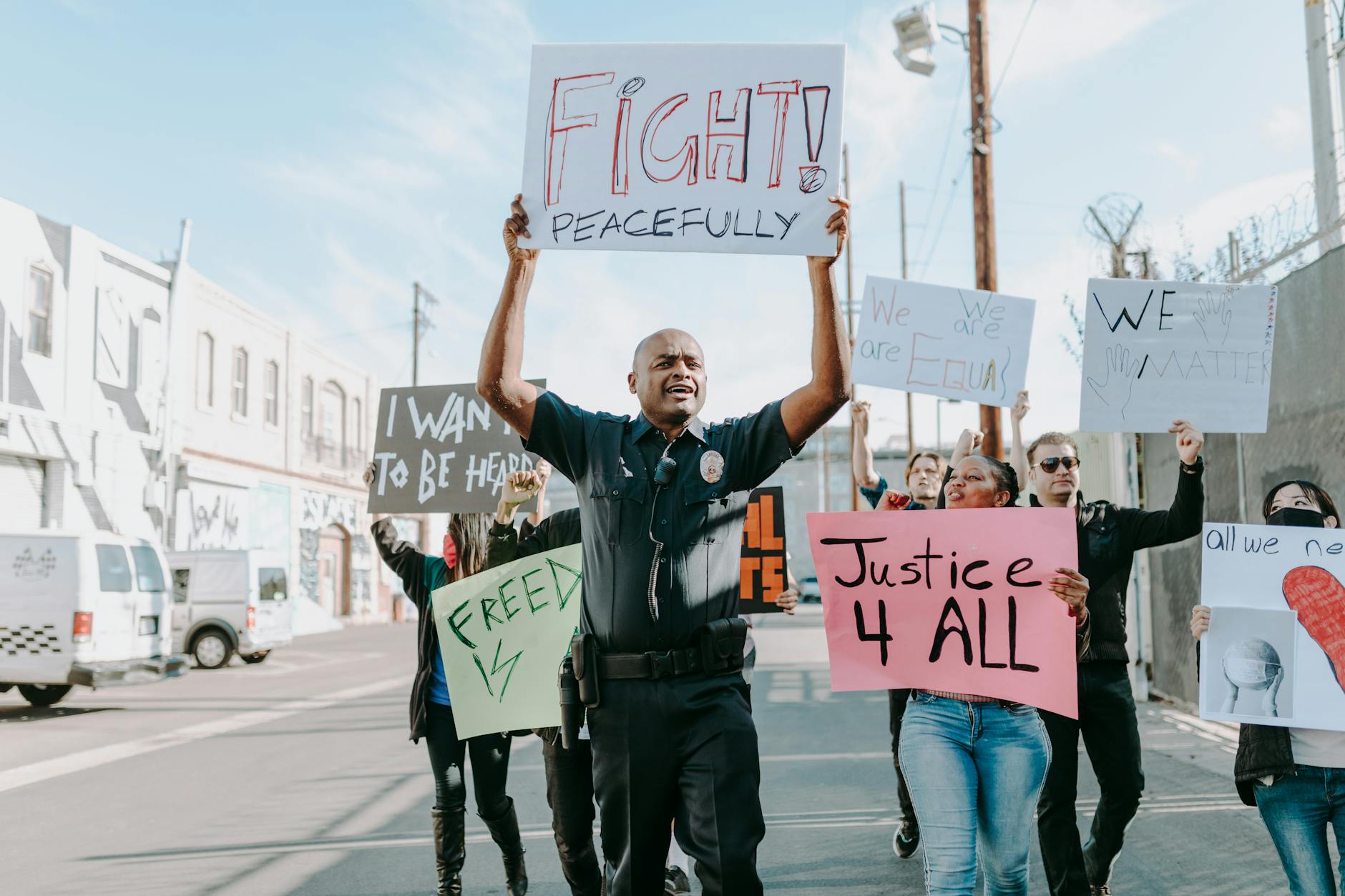 Photo by RDNE Stock project / Pexels
What’s actually happening here is structural decay. Starmer’s got wars exploding, antisemitism surging, and he’s trying to thread a needle that’s impossible to thread: protect a community while not acknowledging that some legitimate protest activity makes people uncomfortable. You either defend protest as a right or you don’t. You can’t do it with asterisks.
The Pension Fund Gambit Nobody’s Talking About
While the UK implodes over what protests to allow, the U.S. State Department just fast-tracked $8.6 billion in weapons deals to the Gulf states and Israel. No congressional review. No delay.
This is Iran policy by other means, and it matters. A lot.
Here’s what you need to know: The Persian Gulf countries and Israel have been getting hammered by Iranian attacks. Rather than slow down and let Congress actually vote on escalation, the Biden administration—because yes, this happened on their watch before the Trump transition—just decided the free market of death could operate without legislative oversight.
The defense establishment calls this “expedited processing.” I call it: we’ve already decided we’re heading toward something bigger with Iran, and we don’t want debate.
This connects directly to what’s happening in the cabinet right now. Defense Secretary Hegseth and Representative Seth Moulton, both Iraq veterans, are having a proxy war about Iran policy through the lens of their shared trauma. Hegseth wants to keep pressure on Iran. Moulton’s implicitly asking: didn’t we learn anything the first time? They’re speaking past each other because they’re both stuck in 2003.
But the $8.6 billion move suggests the Hegseth faction just won. The military-industrial side gets its toys, Congress gets neutered, and we’re on the runway for something in the Persian Gulf before 2026.
 Photo by Andrew Neel / Pexels
The Abortion Pill Reversal Nobody Wanted to See Coming (But Should Have)
A federal appeals court just halted FDA regulations on mifepristone—the pill that’s literally the safest pharmaceutical option for early abortion access. The Supreme Court’s about to be asked to restore it.
This doesn’t sound like breaking news until you remember: the Supreme Court overturned Roe v. Wade in 2022 and sent abortion back to the states. That created a two-tier system where blue states protect access and red states criminalize it. The mifepristone ruling closes one of the few remaining national valves.
My read: this court is going to let the restriction stand. Maybe they’ll temporize with some narrow ruling that sounds moderate. But the trajectory is clear. Within 18 months, mail-order abortion pills will be functionally unavailable. Red state women will travel. Poor women won’t be able to.
This is the most predictable Supreme Court outcome in modern American politics, and it’s still going to shock people when it happens.
The Trump Park Problem
Then there’s the garden. Trump’s planning to build a “Garden of Heroes” along the Potomac River. Two hundred fifty life-size statues of Americans he deems worthy.
I genuinely don’t know what to do with this. It’s so aesthetically absurd—a monument to himself, basically, except technically monuments to other people he likes—that it circles back around to being almost honest. He’s not hiding that he wants to reshape national memory. He’s just building a literal park for it.
The question is: which 250 make the cut? Does Lincoln stay? Does JFK? Does he put himself in there in a subtle way or just go full North Korea? This will tell us more about where Trump thinks the country needs to go than any policy statement.
The Quiet Crisis
Here’s what nobody’s connecting: John Major, the former Tory Prime Minister, went on the BBC and basically said Britain’s political class has stopped governing for the long term. They’re just lurching from one crisis to the next, letting young people down by refusing to tackle structural problems.
He’s right. The UK changes prime ministers like some people change socks—three in one year isn’t stability, it’s evidence the system’s broken. But his critique applies everywhere now. Biden’s gone. Trump’s back. Starmer’s trying to manage collapse. The Defense Secretary and a congressman are arguing about Iran through their therapists’ notes. The abortion court’s made its move. And somewhere, someone’s deciding who deserves a statue.
Nobody’s actually solving anything. We’re all just managing the optics of decline.
What I’m Watching
-
The Supreme Court mifepristone decision timing — Watch for oral arguments by late spring. If the court rules against the pill’s mail-order availability before the 2026 midterms, expect a complete restructuring of abortion politics in blue states trying to become sanctuary destinations. If they delay past summer, political calculation is winning over ideology.
-
Iran escalation indicators in the Gulf — Specifically: new Iranian attacks on commercial shipping or Israeli targets, combined with any U.S. military repositioning announcements in the next 90 days. The $8.6 billion weapons deal suggests we’re past the deterrence phase and into preparation. Watch for routine maintenance of U.S. naval assets being described as “increased presence.”
-
Trump’s Garden of Heroes announcement list — When (not if) he releases the criteria or first names, you’ll see whether he’s building a nationalist monument or a genuine historical pantheon. If living politicians make the list, we’re in new territory. If it skews military and business figures, standard oligarch monument. If it includes any meaningful diversity of thought—abolitionists, labor leaders, civil rights figures who challenged power—I’ll admit I’m wrong about where his head is.
-
UK legislative response to protest restrictions — Starmer’s vague comments will crystallize into actual proposals within six weeks. Watch whether Parliament pushes back or rolls over. If Tories support him on protest limits, that’s the real story: the British political class collapsing on the left-right axis in favor of order at any cost.
The center isn’t holding anywhere. What replaces it—whether that’s genuine reform or just managed chaos—that’s what 2025 is really about.