The Elections That Will Break British Politics (And What America Should Learn)
Local elections this week will expose Labour's fragility—and reveal how parties lose power faster than they gain it.
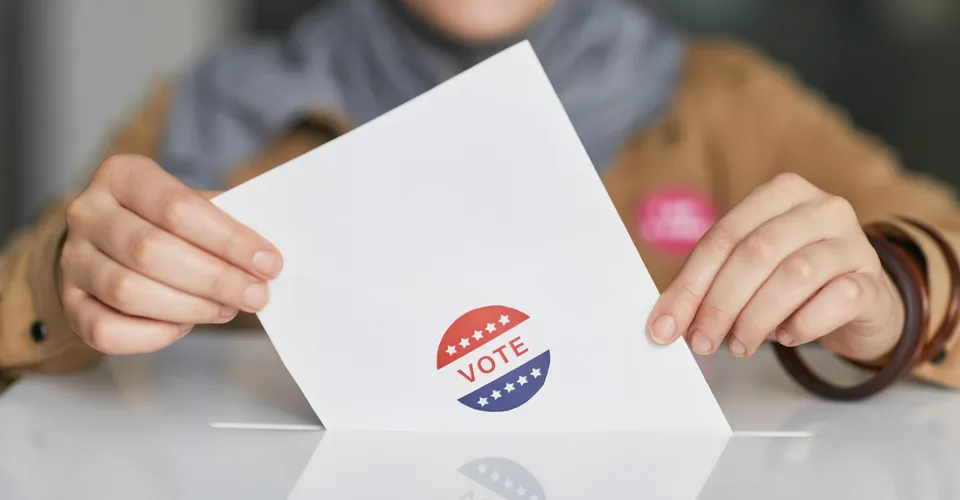
Thursday’s local elections in the UK aren’t just a temperature check on Keir Starmer’s government. They’re a stress test on what happens when a party wins big but loses its grip on voters almost immediately.
Labour swept into power just months ago. Now they’re bracing for a shellacking. That’s not normal. That’s not even typical for a mid-term wobble. That’s a party that’s already bleeding support in ways that suggest something structural has broken.
Let me be direct: this matters to American readers because the same thing could happen here, and faster than anyone thinks.
The British Paradox
Starmer’s party won the 2024 general election decisively. They took office with a massive majority. By any traditional measure, they had a mandate and runway. Yet here we are, just months later, watching the Green Party make gains while Reform UK—a right-wing populist insurgent—plots putting migrant detention centres in areas that voted Green, explicitly to own their political opponents.
This is what happens when a party wins on “not being the other guy” rather than on a compelling vision. Labour ran against the Conservatives’ dysfunction. They won. Now they have to actually govern, and governing means making trade-offs that anger someone. It always does.
The scale of these local elections will, according to the BBC’s Chris Mason, “vividly expose the breadth of Labour’s vulnerabilities.” That’s not spin. That’s a veteran political correspondent who covers Westminster saying: watch for the bad news to be worse than expected.
 Photo by Edmond Dantès / Pexels
What’s Actually Happening
Let’s break down the visible cracks:
The Green Party problem. They’re gaining ground, which sounds small until you remember that Green voters are typically urban, educated, and previously Labour-loyal. If they’re defecting, it’s not to the Conservatives—it’s because Labour isn’t delivering on climate or progressive priorities fast enough.
The Reform UK wildcard. This party is explicitly designed to peel off working-class and right-wing voters from the Conservatives. Their strategy of placing detention centres in Green areas isn’t policy—it’s provocation dressed as policy. It’s designed to drive a wedge between progressive factions. The fact that they’re doing this now, in local elections, suggests they smell blood.
The Green Party’s own crisis. Their leader, Polanski, had to apologize for reposting a tweet criticizing police over the Golders Green response. Not a huge story on its own, but symbolically it’s important: even the Greens are struggling with message discipline and staying focused on their core pitch.
None of this happens if Labour has a clear, compelling reason for voters to stick with them.
The American Mirror
Here’s what should worry Washington: the U.S. has a much faster political metabolism than the UK. Britain’s next general election isn’t until 2029. America’s is in 2026, and a presidential cycle in 2028.
The Democrats are already trying to get ahead of House losses by adding eight candidates to their “battlefield program” and taking sides in competitive primaries. That’s not confidence. That’s triage. They’re trying to manage a defeat, not prevent one.
The parallel isn’t perfect—American midterms usually hurt the sitting president’s party, and that’s baked into expectations. But the dynamic is similar: win big, then immediately face the reality that winning big and governing effectively aren’t the same thing.
I think the Democrats should be watching the UK elections with genuine concern. Not because the outcomes will be identical, but because the underlying pattern—voters souring on a new government within months—suggests something about modern politics that transcends geography.
 Photo by Andrew Neel / Pexels
The Structural Squeeze
Here’s my theory: voter loyalty has decayed so much that “being the alternative” is no longer a sustainable platform. You have maybe a 100-day honeymoon before people start asking: what exactly have you done differently?
Labour won in 2024 on anger at Conservatives. Americans elected Biden in 2020 on opposition to Trump. But anger and opposition are depleting assets. They feel good on election night. By month three, they don’t pay the bills.
Starmer’s government will point to its achievements. But local elections don’t reward steady governance. They punish anything that feels like continuity with the previous regime, and they amplify voices demanding something more radical.
Same calculation in America. Biden’s approval has struggled partly because governing is slow, compromises are inevitable, and voters feel lied to when politicians can’t deliver overnight. The difference is that in the UK, the Conservatives had 14 years of accumulated grievance. Labour should have had more runway. The fact that they don’t suggests voters are just exhausted, or that Starmer’s team misread what people actually wanted.
I’d bet that’s it: they won on “we’re not the Conservatives,” and voters expected that to mean something more specific than it did. Now they’re disappointed, and disappointed voters don’t show up to local elections—or they show up and vote for someone else.
The Bison Nobody’s Watching
One more thing worth noting: while British politics implodes in real time, the Trump administration is evicting bison from federal grasslands in Montana. This seems disconnected from the election story. It isn’t.
This is what happens when an opposition party wins on “we’ll return things to normal”—the other side wins power and immediately rewrites what “normal” means. Bison on federal land? The Trump administration says no. Migrant detention centres in progressive areas? Reform UK says yes.
Both are acts of power assertion, not policy innovation. Both are designed to show voters that the new team is in control. It’s a pattern worth recognizing.
What I’m Watching
Thursday’s local election results in the UK, specifically:
- Whether Reform UK cracks 20% of the vote share. That would signal they’ve genuinely broken through as a third force, not just a protest movement.
- If Labour loses more than 500 seats. Anything above that is catastrophic for a party barely a year into power.
- Whether the Greens net gains exceed 100 seats. That would confirm they’re consolidating progressive defectors.
Starmer’s response speech on Friday. Does he acknowledge that his government needs to reset on messaging, or does he try to spin losses as “local factors”? That’ll tell you whether Labour understands the problem.
The U.S. House elections in competitive districts over the next six months. Are Democrats actually gaining ground with the eight new candidates, or is the “battlefield program” just rearranging deck chairs? By September, we should have real data on whether their 2024 strategy is holding.
Whether the Trump-style “governance by provocation” approach (bison, detention centres, etc.) actually moves voter sentiment. It feels energizing to the base, but does it convert persuadables? The UK elections might tell us something about whether owning opponents actually wins elections or just fires them up.
The real story here isn’t about Starmer or Biden or Trump. It’s that winning an election has become nearly decoupled from governing successfully. Voters reward opposition and punish incumbency with remarkable speed. Figuring out how to break that cycle—rather than just managing the losses—is the challenge every government faces now.