The Inflation Report Nobody Expected Just Killed the Rate-Cut Narrative
March CPI surprised to the downside, but oil's Iran-fueled spike and a fractured Fed leadership tell a messier story. Here's what actually matters.
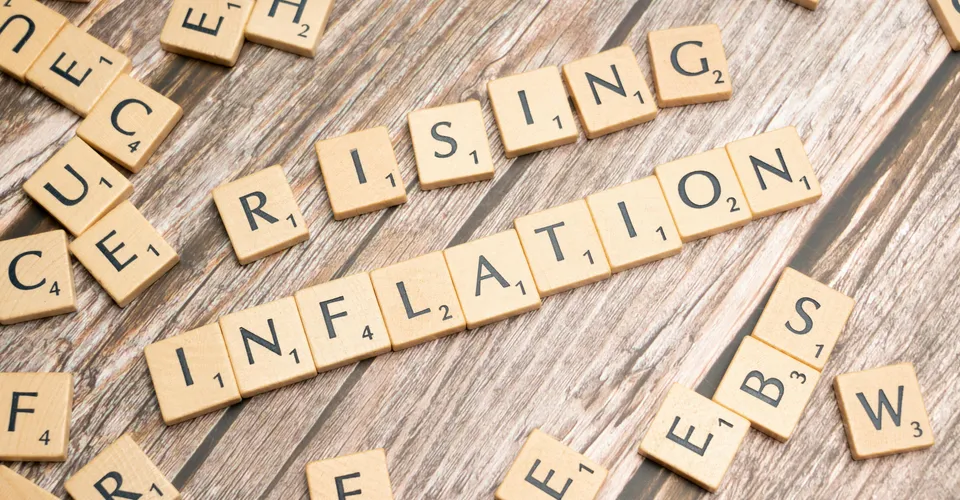
The market got a gift last week and barely noticed.
March’s Consumer Price Index came in at 3.3% year-over-year—right where expectations landed, which sounds boring until you remember that core inflation, the metric the Fed actually cares about, printed at 2.6% annually versus the expected 2.7%. Month-over-month, that core number hit just 0.2% when consensus was calling for 0.3%. On paper, that’s a small miss. In reality, it’s the kind of disinflationary breadcrumb that used to trigger 2% bond rallies.
The S&P 500 went on a seven-session winning streak anyway. TSMC jumped on solid earnings. The Dow wavered. Nobody really celebrated because oil prices were simultaneously having a geopolitical seizure thanks to Iran tensions, pushing the headline inflation number higher even as underlying pressures eased.
This is the market we’re in now: schizophrenic, bifurcated, and impossible to read cleanly.
Oil Won, Inflation Lost (Temporarily)
Here’s the thing nobody wants to say out loud: that CPI beat happened despite energy prices moving in the wrong direction. Oil spiked because of the Iran situation, but it didn’t spike enough to destroy the monthly number. The margin of victory was razor-thin.
What kills me is how little this is moving the needle on rate-cut expectations. Two years ago, a 2.6% core CPI print with declining monthly momentum would’ve had traders pricing in three rate cuts by year-end. Now? The market’s basically assuming Jerome Powell and crew are going to sit on their hands until something breaks.
I’m not even sure that’s wrong. But let’s be honest about what’s happened: the Fed narrative has shifted from “we’re fighting inflation” to “we’re watching inflation” to “we’re helpless while oil does whatever it wants.” That’s a meaningful erosion of the central bank’s credibility, even if nobody’s saying it directly.
 Photo by Markus Winkler / Pexels
The Kevin Warsh Problem Nobody’s Talking About
Buried in the noise was something genuinely consequential: Kevin Warsh’s Federal Reserve chair nomination hit a snag when Senator Thom Tillis delayed the hearing, citing concerns over a probe of current Chair Jerome Powell.
Think about that timing. We just got soft inflation data. The stock market’s on a winning streak. Core inflation is moderating. And the moment the market might expect some policy clarity from incoming Fed leadership, the nomination process grinds to a halt over what amounts to a political grudge match.
I genuinely don’t know how this resolves. But what I know is this: Warsh represented a potential shift toward a more dovish, market-friendly Fed. His stalling creates uncertainty at exactly the wrong moment—when the market needs to understand what policy regime it’s operating under. Is Powell staying? Is Warsh coming in? Are we getting rate cuts or not?
Uncertainty doesn’t usually crash markets, but it does freeze capital allocation. And frozen capital allocation means you get lower flows into equities even as economic data improves.
The Oil Squeeze That Isn’t (Yet)
ExxonMobil’s returned 178% since April 2021, nearly tripling the S&P 500’s 64.2% gain. It’s up 39.3% in the last six months alone. The stock trades at $154.29 and, according to the source material, has been “a dream stock for shareholders.”
Dream stocks are usually the ones most vulnerable to reversals.
My honest read: XOM’s outperformance has been legitimate—energy demand is real, supply discipline has held, and energy markets remain tight. But we’re now at a point where oil prices are doing the heavy lifting for energy stocks, and oil prices are being driven by one acute geopolitical event (Iran). The moment that event resolves—or stops escalating—energy stocks could give back gains as quickly as they grabbed them.
What concerns me more is that energy’s outperformance is creating a dangerous complacency about portfolio concentration. If you’ve been overweight XOM or energy broadly, you’re basically making a bet that either Iran tensions stay elevated or that oil demand remains permanently buoyant. Neither of those feels like a high-conviction call right now.
 Photo by Markus Spiske / Pexels
The Chip Story Keeps Printing Money
TSMC’s revenue jumped 35% to new record highs on sustained AI demand from Apple and Nvidia. This is the one part of the market that actually feels unstoppable right now—there’s real demand, real scarcity, real pricing power. Unlike energy, which is cyclical and geopolitical, chip demand is structural.
I’m watching TSMC less for validation of the AI thesis and more as a proxy for whether corporate capex is actually flowing through to real economic activity. If advanced chip demand is truly this strong, it should show up eventually in corporate earnings, margin expansion, and downstream demand. If it doesn’t, then the AI capex cycle is real but extremely concentrated, which would be… let’s call it clarifying for valuations.
The Hedge Fund Playbook Goes Mainstream
BlackRock just launched liquid alternative ETFs that basically wrap hedge fund strategies—long-short equity, market-neutral structures—into ETF format. This is worth watching because it signals that BlackRock sees an opportunity to capture fee pools that have historically gone to hedge funds.
Why does this matter for the broader market? Because hedge funds have spent 20 years underperforming equities while charging 2-and-20. The moment you can get that strategy in a 0.50% expense ratio wrapper, the economic incentive to use a hedge fund evaporates. That capital flows into mutual funds and ETFs instead, which means it flows toward index exposure, which means it becomes less active and more passive.
We’re slowly watching the death of hedge fund economics in real time. That’s good for retail investors. It’s terrible for the 50-year-old hedge fund manager who’s built a business model around opacity and high fees.
What I’m Actually Thinking
The CPI data was good, but it wasn’t transformative. Core inflation is cooling, which is what the Fed wanted to see. But that cooldown happened despite oil price spikes, which means the disinflationary momentum might be fragile. One more supply shock and we’re back to 3.5% core inflation in a heartbeat.
The bigger issue is policy uncertainty. Warsh’s nomination stalling means we don’t know what the Fed’s actual stance is going to be for the next 18 months. Is Powell staying? We don’t know. Are we getting rate cuts? The market’s pricing in maybe one. Is that correct? Nobody actually knows because Powell’s statements have been deliberately vague.
In an environment where the stock market can rack up a seven-session winning streak on inflation data that beats estimates by roughly 0.1%, we’re operating on fumes. Momentum, not fundamentals. Geopolitical tailwinds, not earnings growth. Energy outperformance, not broad-based strength.
That’s not a disaster. But it’s fragile.
Photo by Markus Spiske / Pexels
What I’m Watching
-
Warsh nomination timeline. If this drags past June without resolution, it signals real dysfunction in the confirmation process and creates massive policy uncertainty heading into Q3. Watch for Tillis to either drop the Powell probe or Warsh to withdraw. Either way, clarity matters.
-
Oil prices and geopolitical escalation. Iran tensions have given energy a 3-4 week gift. If crude stays above $85/barrel through May without new escalation, it’s demand-driven. If it spikes above $95 on Iran news, we’re in a different risk regime entirely.
-
TSMC earnings margins and forward guidance. The 35% revenue jump is impressive, but the real test is whether margins expand or flatten. If TSMC is at peak utilization and can’t raise prices further, that’s the canary in the coal mine for whether AI capex is hitting a ceiling.
-
Fed speakers’ language on rate cuts vs. holds. After the CPI beat, watch Powell, Barr, and other dovish Fed officials to see if anyone signals rate cuts are back on the table. If nobody does, that’s the actual story—the data improved but policy didn’t budge.