The Iran War Just Broke British Politics Too
Trump's Middle East gamble is reshaping energy markets and political calculations from Westminster to Capitol Hill
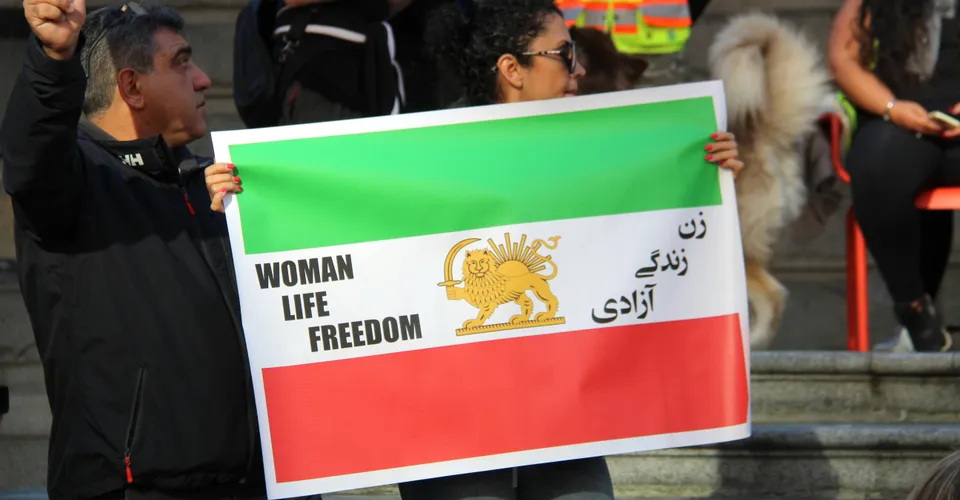
The protesters at those “No Kings” rallies thought they were making a statement about American democracy. They had no idea they were watching the opening act of a global political realignment.
Trump’s Iran war isn’t just reshaping American politics — it’s cracking open fault lines from Westminster to Wall Street that nobody saw coming. While Senate candidates in swing states scramble to position themselves on a conflict that’s already lasted longer than anyone predicted, British politicians are discovering that their constituents care less about constitutional principles and more about heating bills.
Kemi Badenoch figured this out faster than most. The Tory leader’s demand to “cut taxes on energy bills before giving bailouts” isn’t just opposition positioning — it’s recognition that the Iran conflict has fundamentally altered the political math around energy policy. When natural gas prices spike because Persian Gulf supplies get disrupted, abstract debates about fiscal responsibility meet the very concrete reality of families choosing between heating and eating.
 Photo by Sima Ghaffarzadeh / Pexels
The Energy Endgame Nobody Planned For
Here’s what’s actually happening while everyone argues about war powers and congressional oversight: The Iran conflict is forcing a complete recalculation of global energy strategy. Countries that spent decades building natural gas infrastructure are suddenly eyeing coal, solar, and nuclear alternatives. The U.S. and other gas exporters are positioned for a massive windfall, but the disruption is pushing importing nations toward energy independence faster than any climate accord ever could.
This isn’t the gradual energy transition policymakers sketched out in their net-zero plans. It’s economic shock therapy administered at gunpoint.
The political implications are staggering. In Britain, Badenoch can sound populist and fiscally conservative simultaneously by opposing bailouts while demanding tax cuts. It’s a positioning that would have been impossible before energy became a national security issue. She’s betting that voters will reward politicians who acknowledge their pain directly rather than those who offer complex subsidy schemes.
I think she’s right.
The alternative — direct payments to households when bills spike — puts Labour in the uncomfortable position of defending handouts while energy companies post record profits. Badenoch won’t rule out such payments entirely, but she’s made sure everyone understands they “come at a cost.” Translation: Labour created this mess with their energy policies, and now they want taxpayers to pay twice for it.
When Foreign Wars Become Domestic Politics
The historical parallel isn’t Vietnam or Iraq — it’s the 1973 oil embargo.
Back then, Nixon faced gas lines and inflation that turned a foreign policy crisis into domestic political poison. The difference now is that Trump actively chose this conflict, and the economic consequences are unfolding in real time across allied nations whose leaders had zero input on the decision to escalate with Iran.
That’s why the CPAC straw poll results matter more than typical conference theater. J.D. Vance’s victory and Marco Rubio’s momentum among MAGA faithful signal that Republicans aren’t split on the Iran war — they’re consolidating around it. The conference organizers pushed back hard against narratives of GOP division, and the polling backs them up. Republican voters are treating Iran as a test of resolve, not a quagmire.
The question is whether that resolve survives $6 gas and winter heating bills that double overnight.
 Photo by Anna Keibalo / Pexels
The FBI’s Swalwell Files and the Paranoia Feedback Loop
Meanwhile, the Trump administration’s demand that the FBI dig up old investigative files on Eric Swalwell reveals something darker brewing beneath the surface. Career law enforcement officials are reportedly alarmed by the “urgent instructions” to gather and relay files on the Democratic congressman, but their alarm misses the bigger picture.
This isn’t random harassment. It’s systematic preparation.
Trump’s team understands that prolonged conflict creates political vulnerability, especially if economic pain persists. They’re building a narrative infrastructure to blame domestic critics for undermining the war effort. Swalwell, with his past connections to Chinese intelligence operations, makes an ideal target for that narrative.
The timing isn’t coincidental. As the Iran war drags on and economic consequences mount, the administration needs enemies closer to home. Republicans learned from Iraq that foreign wars become politically toxic when they combine battlefield stalemate with economic hardship. Their solution isn’t to avoid those conditions — it’s to have scapegoats ready when they arrive.
Josh Simons learned this lesson the hard way. The minister who resigned over Labour Together claims discovered that think tank connections and opposition research are now radioactive in ways they weren’t just months ago. His admission that he was “naive” about commissioning background reports on journalists speaks to how quickly the political environment has shifted. Activities that seemed like standard political intelligence gathering now look like potential security threats.
The Institutional Strain Nobody’s Tracking
Here’s what really worries me: The system isn’t designed for this kind of pressure.
The House of Lords can debate assisted dying legislation all they want, but both sides now acknowledge it won’t become law this parliamentary session. Why? Because institutional bandwidth gets consumed by crisis response, and everything else gets pushed to the back burner.
Schools facing SEND reform implementation are discovering the same dynamic. The National Education Union’s warning that schools lack sufficient staff to make inclusive classrooms work might be correct on the merits, but it’s politically irrelevant when energy security dominates every budget conversation. Domestic policy initiatives that seemed achievable six months ago are now competing with war costs and economic stabilization measures.
This is how foreign conflicts metastasize into governance failures.
The investigation into alleged “family voting” in recent by-elections found no evidence of intent to influence voting, but the fact that such investigations are happening signals deeper institutional anxiety. When political systems face external pressure, they become hypersensitive to internal threats, real or imagined.
The Democrats’ Impossible Position
Democratic lawmakers are trapped in a box that gets smaller every day.
They can’t fully oppose the Iran war without appearing weak on national security. They can’t fully support it without owning the economic consequences. And they can’t ignore it while their constituents pay higher prices for everything from gasoline to heating bills.
The “No Kings” rallies captured this tension perfectly. Protesters focused on Trump’s immigration crackdown and constitutional overreach, but the war in Iran was the “galvanizing force” that brought them together. They’re angry about executive power while living through its consequences in real time.
Senate candidates in key races joined those crowds because they had to be seen doing something. But showing up at protests doesn’t solve the fundamental problem: How do you campaign against a war that your voters simultaneously oppose and benefit from economically?
The U.S. energy sector is positioned for massive profits from Iran conflict disruptions. That creates jobs in red states and swing districts. It also creates higher prices everywhere else. Democratic candidates have to thread the needle of opposing Trump’s war while supporting American energy workers who profit from it.
Good luck with that math.
 Photo by Tara Winstead / Pexels
The Real Test: How Long Can This Last?
Every political calculation hinges on duration.
If the Iran conflict wraps up quickly with decisive American victory, Trump gets vindicated and his international economic disruptions become footnotes. If it drags on with mounting costs and unclear objectives, history suggests presidencies don’t survive that combination.
The problem is that nobody knows which scenario we’re living through. Trump’s team clearly believes they can maintain domestic support through economic nationalism and scapegoating critics. British politicians like Badenoch are betting they can turn energy disruptions into electoral advantages by positioning themselves as the adults who deal with reality rather than ideology.
But both calculations depend on voters maintaining faith that their leaders have some control over events. When foreign wars create domestic economic pain, that faith erodes quickly.
I’ve covered enough crises to know that the political damage often comes not from the initial shock but from the slow grind of consequences that compound over months. Energy prices that spike overnight grab headlines. Energy prices that stay elevated for quarters destroy governments.
The Iran war is barely getting started, and it’s already reshaping political strategies across two continents. The politicians adapting fastest to this new reality will survive. The ones still fighting last year’s battles won’t.
What I’m Watching
- British energy bill announcements in February 2024: If household costs spike above £2,500 annually, Badenoch’s positioning becomes either prophetic or politically suicidal depending on Labour’s response
- Senate race polling in Pennsylvania, Arizona, and Nevada through March: These states combine energy sector employment with vulnerable Democratic incumbents — the first place where Iran war economics will show up in voter preferences
- FBI document release patterns around Democratic critics: If more opposition research surfaces on lawmakers beyond Swalwell, it signals systematic campaign preparation rather than isolated targeting
- Natural gas futures prices hitting $8+ per MMBtu: The threshold where European allies start seriously considering energy alternatives that reduce U.S. leverage long-term
The next six months will determine whether Trump’s Iran gamble reshapes the global order or destroys his presidency. Either way, we’re all along for the ride.