The Jet, the Hostages, and the Strait: How One Shootdown Reshuffled Everything
A US fighter jet goes down over Iran. Suddenly, deportations become leverage, European shipping routes collapse, and Trump's ultimatum clock starts ticking. Here's what's actually happening.
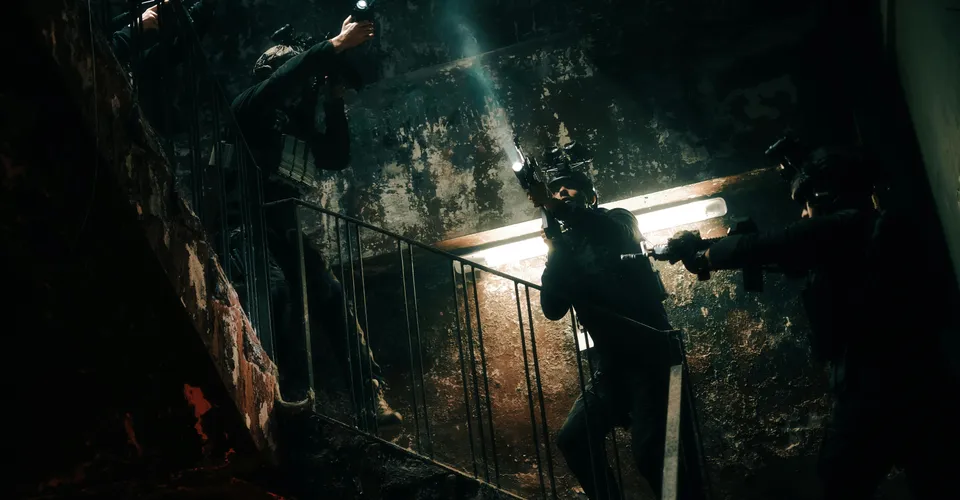
The pilot ejected safely. One crew member is still missing.
That sentence sits heavy. Not because it’s tragic—though it is—but because it’s the hinge pin on which the entire dynamic between Washington and Tehran just pivoted. A shootdown that was meant to be a tactical exchange became something messier: proof of concept that this conflict has teeth, and that neither side can control where those teeth land.
Let’s start with what we know. A US fighter jet went down somewhere over Iran. Search and rescue operations are underway for the second crew member. The pilot made it out. This happened in the context of escalating military operations—Israel just struck a petrochemical complex in Iran’s southwest, and the US had already been flying missions in the region. These aren’t isolated incidents. They’re breadcrumbs leading somewhere darker.
 Photo by Wolrider YURTSEVEN / Pexels
When Deportation Becomes a Weapon
Here’s the thing that should alarm you more than a shootdown: the White House has quietly converted deportations into a foreign policy tool. That’s not rhetoric. That’s structural.
Trump’s administration arrested the niece and grand-niece of Qasem Soleimani—the late Iranian general whose 2020 assassination set off this entire chain reaction. They’re in ICE custody. Now, why mention that in the same news cycle as a downed jet? Because hostages and leverage work both ways. The US isn’t hiding what it’s doing. It’s broadcasting it.
This is a translation of Trump’s playbook into the Iran context. Domestic policy—who gets deported, who stays—becomes a negotiating chip. Autocrats are apparently “ready to listen,” which is a polite way of saying they understand the language now. You hold my nationals, I hold yours. It’s crude. It’s also effective in ways that traditional diplomacy pretends don’t exist.
The calculus has shifted. When you’re arresting family members of dead generals, you’re not having a conversation anymore. You’re sending a message in a language both sides fluently speak: escalation.
The Strait Question That Europe Can’t Answer
Trump said time was “running out” on his ultimatum to reopen the Strait of Hormuz. European officials are reportedly circulating ideas about how to restore shipping once “the Iran war ends.” Let me pause on that phrase: “once the Iran war ends.” Not “if.” When.
The Strait of Hormuz is the chokepoint for roughly 20% of global oil. It’s controlled by geography and gunboats. Right now, it’s closed to normal traffic. European leaders—who depend on that shipping lane as much as anyone—have admitted their options are “few, and risky.” Translation: they’re out of moves.
Europe can’t fight its way through. It can’t negotiate separately from the US because Washington has already set the terms. It can’t ignore it because energy prices will spiral. So Europe watches. This is what irrelevance looks like in real time—not collapse, just the slow realization that the game is being played by others and you’re a spectator who has to pay to watch.
I think Europe’s paralysis here is the real story. When the JCPOA (the Iran nuclear deal) fell apart in 2018, Europe tried to preserve it independently. That failed. Now, facing an actual military crisis, they have even fewer options. They’re not in the decision loop anymore.
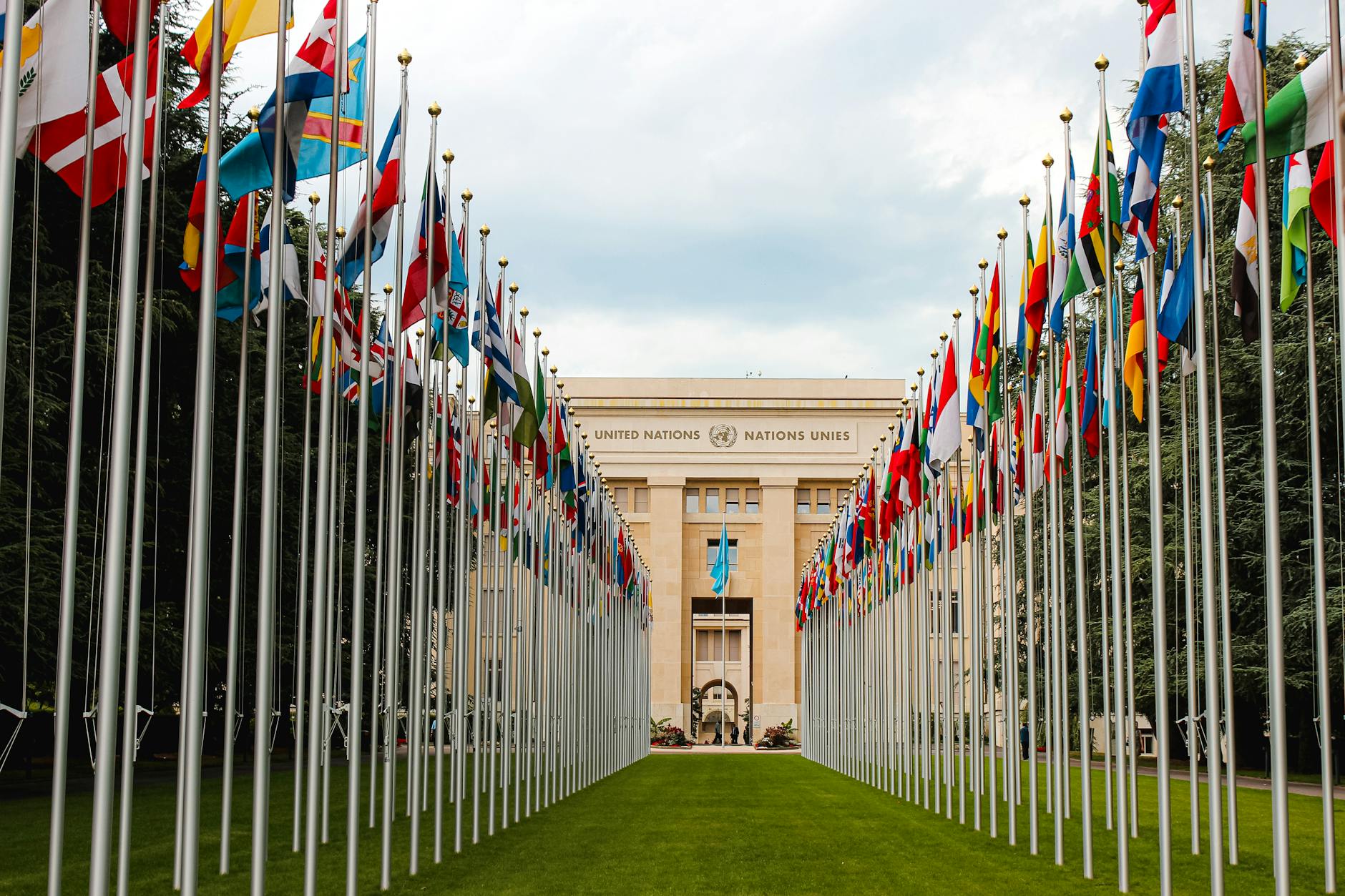 Photo by Mathias Reding / Pexels
The Nuclear Plant Problem Nobody’s Talking About
The IAEA—the UN’s nuclear watchdog—is issuing “deep concern” warnings about attacks on Iran’s Bushehr nuclear plant. This is bureaucratic language for “we’re terrified.”
Nuclear plants in conflict zones don’t have good outcomes. Fukushima wasn’t in a war, and look at what happened. Bushehr is actively being targeted. The IAEA is basically saying: restraint please, or we might have a radiological catastrophe on top of everything else.
Here’s what’s weird: nobody’s really treating this like the existential risk it is. If Bushehr gets hit hard enough, you’re looking at displacement, contamination, a humanitarian crisis that makes the current situation look quaint. But it’s not getting the same urgent coverage as the downed jet or the Strait.
That’s because it’s abstract. A missing crew member is concrete. Radiological fallout is hypothetical—until it isn’t. By then it’s too late.
Meanwhile, Life Goes On
While all this is happening, Iranian families are having picnics. Celebrating the end of the new year holiday. Playing games. There’s a strange poignancy in that detail—ordinary people seizing a “brief chance to celebrate” while their government and a foreign superpower play chicken with missiles and nuclear plants.
Afghanistan’s getting hammered by floods and earthquakes (77 dead this week, 12 more from Friday’s quake), and nobody’s focusing on that either. The region’s a pressure cooker, but we’re watching one dial instead of the whole system.
What I Actually Think Is Happening
My read: Trump’s ultimatum on the Strait is real, but the timeline’s fuzzier than the rhetoric suggests. The US isn’t ready for a full-scale invasion. The downed jet proves Iran can still inflict costs. So what you’re seeing is shadow boxing—strikes against petrochemical plants, rhetoric about time running out, arrests of Iranian relatives as leverage.
The deportation-as-diplomacy move is genuinely novel and genuinely unsettling. It collapses the line between domestic and foreign policy in ways previous administrations avoided, even when they had the power to do it. It also signals that the US doesn’t think traditional negotiating channels matter anymore. You want something from us? Prove you can hurt us and we’ll talk about what your people are worth.
I think the Strait stays closed through Q1 2025, minimum. Europe finds workarounds (alternative shipping, energy hedges, increased reliance on non-Middle Eastern sources). Nobody likes it. Prices stay elevated. The IAEA keeps issuing warnings that nobody acts on until something happens.
Here’s what I’m genuinely uncertain about: whether the missing crew member is still alive, and whether that answer changes the calculus. If they’re recovered, this becomes a moment of tension that eventually defuses. If they’re not, you’ve got a martyr story on both sides, and martyr stories don’t defuse easily.
Photo by Mathias Reding / Pexels
What I’m Watching
-
The missing crew member status by end of next week. This is the variable that either lets both sides declare victory and step back, or locks in deeper escalation. Watch for any Iranian statements offering deals or, worse, silence.
-
Whether Europe actually breaks ranks on Iran policy by March 2025. If even one major European economy tries to circumvent US sanctions to restore Strait shipping, the entire deterrence structure collapses. That’s the real fragmentation risk.
-
Bushehr plant status through February. Specifically: any Israeli or US statements about targeting it, and any IAEA incident reports. One serious incident there changes the entire calculus from geopolitics to humanitarian emergency.
-
Trump’s next escalation statement and whether it includes specifics or dates. Vague ultimatums are theater. Specific ones (e.g., “30 days to reopen the Strait”) are commitments he’ll feel pressure to back up.
The downed jet was supposed to be a symbol of American power. Instead, it became a symbol of how much territory the US no longer controls unilaterally. That’s the real news hiding under the headline.