The Musk Trial Just Exposed Silicon Valley's Real Dysfunction
While OpenAI and Elon battle it out in court, the AI industry is quietly accepting government oversight—and that's the story nobody's talking about.
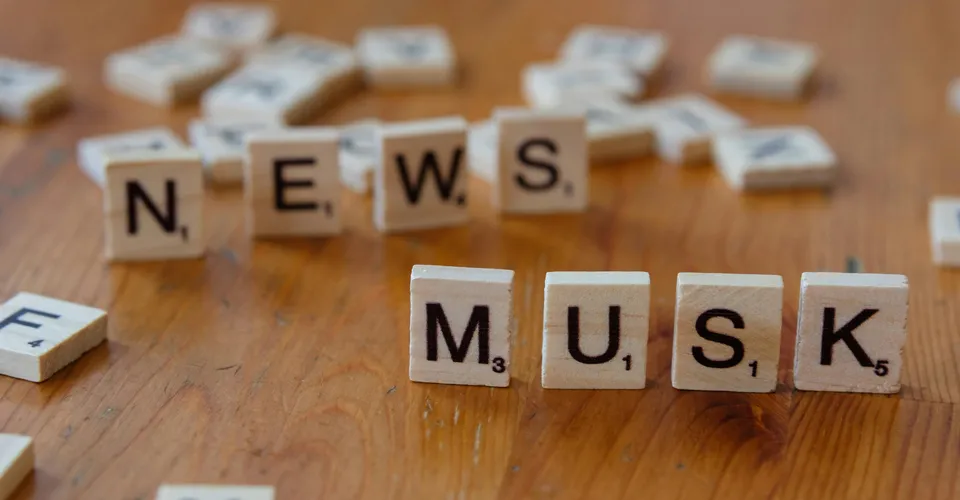
The most important thing happening in AI right now isn’t what’s being litigated in that Musk-OpenAI courtroom. It’s what’s being quietly agreed to in Commerce Department offices.
But first, let’s talk about the trial, because it’s a perfect mirror of what’s broken in how we talk about technology leadership. Greg Brockman, OpenAI’s president, testified that Elon Musk made him feel physically threatened during their fallout over the company’s direction. Meanwhile, Musk’s lawyers are in federal court arguing that Brockman—worth an estimated $30 billion—was motivated by greed rather than safety concerns. The subtext is vicious: these guys aren’t arguing about AI ethics anymore. They’re arguing about who gets to be seen as the good guy.
This is what happens when a company starts as a nonprofit with a safety mission and mutates into a for-profit venture that could generate billions in shareholder value. Everyone’s motives become suspect, including their own.
 Photo by Markus Winkler / Pexels
The Real Plot Twist
Here’s what I find fascinating: while Musk and Altman are spending millions on lawyers, the Trump administration—which you’d expect to be anti-regulation—is discussing pre-release vetting of AI models. The White House is considering mandatory safety testing before companies deploy new systems. This isn’t Biden-era thinking anymore. This is the current administration, which took an explicitly hands-off stance on AI, now reconsidering.
It gets weirder. Google, Microsoft, and xAI have already signed new safety testing agreements with the Commerce Department. These aren’t toothless commitments either—they’re building on frameworks started under Biden. That means the industry is racing toward a regulatory equilibrium that looks a lot like: submit your models for safety checks before release.
Anthropic’s CEO, Dario Amodei, is apparently fine with this. He’s also claiming the company could grow 80 times this year. That’s not a typo. Eighty times. And he’s got Blackstone and Goldman Sachs backing him to build infrastructure around it. You don’t get that kind of institutional capital unless there’s a clear path to legitimacy, and legitimacy now comes with regulatory blessing.
So the Musk trial is two billionaires fighting over a rounding error while the actual industry is restructuring itself around something that looks increasingly inevitable: government-blessed AI deployment.
 Photo by nappy / Pexels
The Uncomfortable Truth About “Safety”
Here’s where I need to be honest about my uncertainty: I don’t know if pre-release testing actually makes AI safer, or if it just makes it feel safer while extracting regulatory rent from smaller competitors who can’t afford the compliance overhead.
But I know this: the companies signing these agreements aren’t being forced at gunpoint. They’re volunteering. That suggests they’ve already calculated that formal oversight is cheaper than the alternative. Cheaper than lawsuits. Cheaper than the reputational damage from an AI failure that Congress decides to investigate. Cheaper than having your model become the next flashpoint in culture war politics.
Apple just agreed to pay up to $95 per iPhone to settle claims that its Apple Intelligence advertising misled customers. That’s not a massive penalty in absolute terms, but it’s a signal: the FTC is willing to go after AI marketing claims that don’t hold up. The SEC settled with Musk over Twitter stock disclosure violations for $1.5 million—a number so small it barely registers, but the fact that the SEC is settling at all shows they’re not abandoning enforcement. They’re just being more selective.
What’s the pattern? The regulatory regime is tightening selectively. It’s not banning AI. It’s creating friction around deployment, marketing, and disclosure. That friction is manageable for companies like Google and Microsoft. It’s less manageable for the next Anthropic trying to scale.
The Battlefield That Matters
Ukraine just used robots and drones to capture territory with minimal human soldiers involved. Not as support. As the primary force. President Zelensky said it explicitly. That’s not hypothetical anymore—that’s battlefield-tested technology creating facts on the ground.
This matters for AI regulation because it changes what regulators think they’re regulating. It’s not just ChatGPT refinement queries anymore. It’s autonomous weapons systems. It’s the technology that wins wars. Suddenly, “let the industry self-regulate” sounds naive, not principled.
The White House isn’t considering pre-release testing because they got woke. They’re considering it because unmanned warfare is real and they want visibility into what American companies are building before it’s deployed globally.
That’s the actual stake in the regulatory shift. It’s not consumer protection. It’s national security.
My Read
The Musk trial is entertainment masquerading as substance. Two guys who used to be allies are now fighting over who built what and who betrayed whom. It’s genuinely ugly. But it’s also a distraction from the fact that the AI industry’s power structure is consolidating around government oversight rather than against it.
Anthropic gets 80x growth potential backed by Wall Street capital and regulatory blessing. OpenAI gets sued by Musk but remains the de facto standard for enterprise AI. Google, Microsoft, and xAI get to look responsible by submitting to safety testing that probably won’t materially slow them down.
The losers? Anyone building AI outside this ecosystem. Anyone who can’t afford compliance costs. Anyone who thought the move from “AI as wild west” to “AI as regulated utility” would be painful for incumbents rather than protective.
I think the trial is going to drag on, both sides will claim victory, and nothing will fundamentally change about how Musk, Altman, and the rest of the leadership team feel about each other. But by the time the verdict comes down, the regulatory framework will already be set. The trial will be a footnote to a story about power consolidation.
Here’s what I’d actually watch for: not the trial outcome, but whether smaller AI companies start announcing compliance partnerships with the big players. That’s the moment when you know pre-release testing isn’t coming—it’s already here.
 Photo by Markus Spiske / Pexels
What I’m Watching
-
Wall Street’s AI infrastructure plays: Blackstone backing Anthropic isn’t random. If major investment banks are moving capital into AI companies that play nice with regulators, that’s a signal they think regulatory cooperation is the path to defensible returns. Watch whether similar patterns emerge around xAI or other frontier model labs. If they don’t, Anthropic’s bet might be idiosyncratic rather than structural.
-
The first company that refuses to submit to pre-release testing: Someone will push back. They’ll argue it’s unnecessary, or that it stifles innovation, or that it’s a Chinese advantage. When that happens—watch whether the Commerce Department actually has teeth or if they’re bluffing. A real enforcement action would clarify everything.
-
Apple Intelligence advertising class actions: If the FTC’s willingness to settle on AI marketing claims emboldens other plaintiffs, we could see a cascade of lawsuits targeting AI feature claims across the industry. The $95-per-phone number is small, but it establishes precedent. If three more companies face similar suits, the compliance cost of making AI-adjacent marketing claims becomes material.
-
Anthropic’s actual 2025 growth rate: 80x is insane. If they hit even 10x, they’ll prove that regulatory cooperation doesn’t cap growth. If they hit 3x, the whole thesis—that working with government unlocks outsized returns—collapses. The number that matters is public by Q3 2025.