The Pope vs. Trump, China's Silent Calculus, and the New Rules of Staying Out
While religious leaders and autocrats clash, Beijing's refusal to meddle in the Iran war reveals who actually holds power in 2025 diplomacy

The Pope called out tyrants. Trump called the Pope weak. Meanwhile, China watched it all happen and decided to do absolutely nothing.
That’s not a setup for a joke. That’s the actual state of global diplomacy right now, and it tells you everything you need to know about who’s winning and who’s just making noise.
When Religious Authority Crashes Into MAGA
Pope Francis criticized leaders who spend billions on wars while their own people suffer. The timing was deliberate—it landed right after Trump went after him publicly, questioning his toughness on crime. This is what happens when you’ve got a 88-year-old pontiff with nothing left to lose and a president who believes all publicity is good publicity.
Here’s the thing: the Pope’s been making these critiques for years. Francis has spent his papacy talking about economic inequality, militarism, and the moral bankruptcy of endless conflict. But this spat matters because it’s public now. It’s a crack in something that used to be cordial, at minimum.
I actually think the Pope is doing something smarter than Trump realizes. By calling out “tyrants” generically—not naming names—Francis is positioning himself as the last adult in a room full of autocrats and strongmen. Trump fires back, which makes him look defensive. The Vatican doesn’t fight back harder. That’s restraint. That’s power.
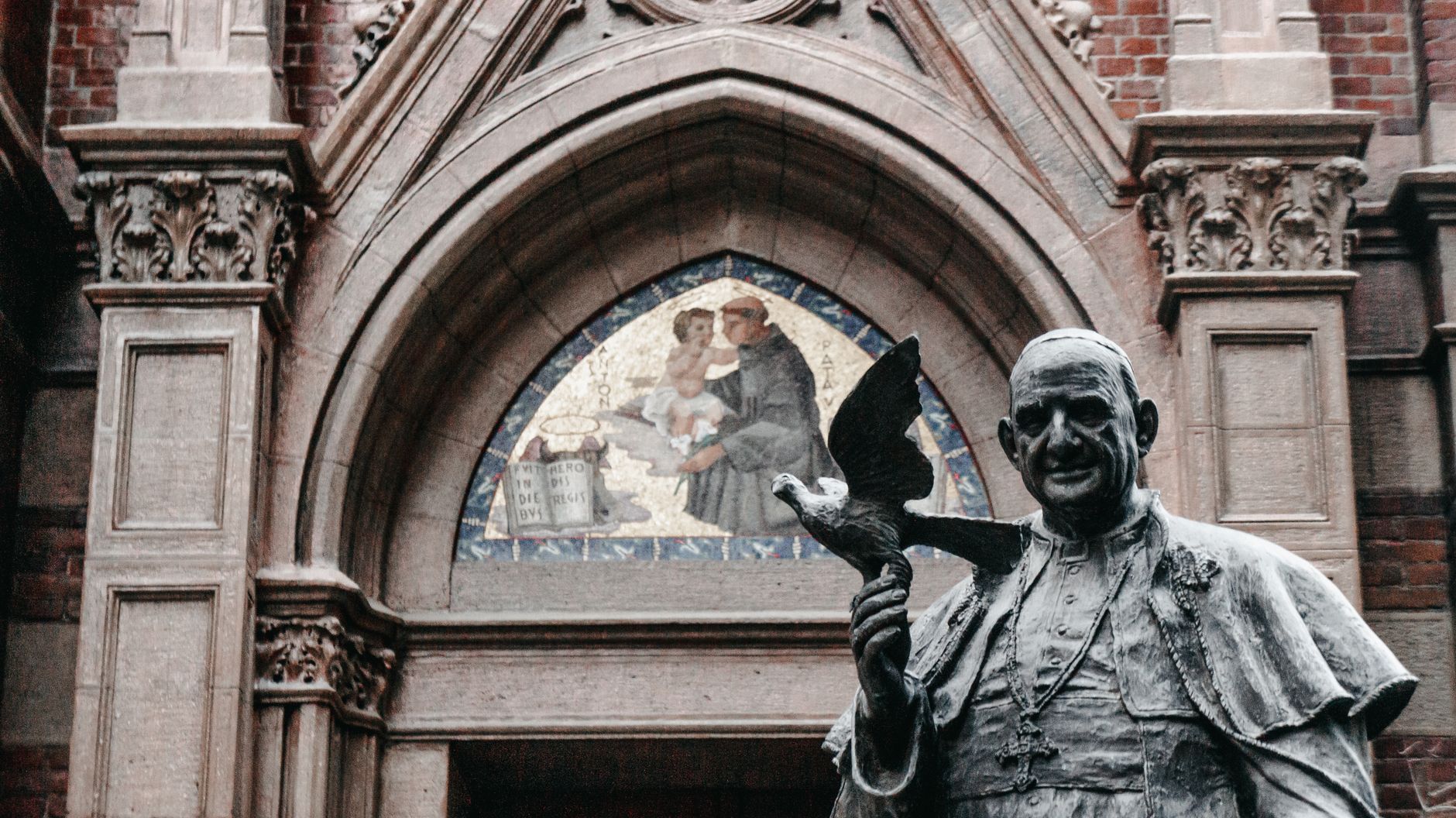 Photo by Ikbal Alahmad / Pexels
The Fertilizer Plant Nobody’s Talking About But Should Be
Ukraine is trying to privatize a major fertilizer facility. On its surface, this sounds like economic policy. It’s not. It’s survival theater.
Think about what this means: Kyiv is so desperate for foreign investment and foreign confidence that it’s willing to sell off critical infrastructure during an active war. The pitch is basically: “Give us $100 million and take control of this plant—yes, the Russians will probably bomb it, but maybe they won’t, and you’ll get rich if they don’t.”
That’s not capitalism. That’s desperation wearing a business suit.
The real story here is that Ukraine’s government believes it can’t get the money any other way. Not from bonds. Not from loans. Not from allies without strings attached. So they’re selling the family silver. This is what year three of existential conflict does to you—it warps your judgment about what you should never sell.
My read: this deal won’t happen. Foreign investors aren’t idiots. But the fact that Ukraine’s making this pitch tells me they’re running out of conventional options faster than public statements suggest.
China’s Genius Move (Doing Nothing)
Beijing isn’t pushing Iran to accept American demands to end the war. You’d think they would. An Iran-Israel war destabilizes the Middle East, threatens shipping lanes, and makes energy prices volatile—all bad for China’s economy.
But China’s staying out. That’s the headline underneath the headline.
This is sophisticated risk management disguised as passivity. China opposed the conflict from the jump, but it has zero leverage with Iran and doesn’t want to be seen as an American proxy. So it does what it does best: wait, watch, let others burn themselves out, then move in with deals when the dust settles.
Compare this to how the US operates. America tries to mediate everything, enforce settlements, maintain a global security umbrella. It’s exhausting. It makes enemies. It ties you to every bad outcome that follows your “help.”
China’s approach is almost Buddhist by comparison. Don’t grasp. Don’t force. Don’t get tangled up in other people’s wars. Just be the guy with money and patience when everyone else is broke and desperate.
I think this is going to be the dominant foreign policy strategy of the next decade. Why waste resources trying to solve conflicts you can’t solve? Let the Americans and Europeans burn themselves out on mediation. You show up in 2028 with a checkbook.
 Photo by Markus Winkler / Pexels
The Scattered Pieces (and What They Mean Together)
Turkey detains 162 people for online posts about school shootings. Ukraine tries to sell a fertilizer plant. Brazil’s former spy chief gets detained in Florida. Russia launches its deadliest attack in months. Israel agrees to a ceasefire in Lebanon while keeping troops on the ground.
These aren’t random. They’re symptoms of a world where:
Governments are panicked about information control. Turkey’s arresting people for posts about real violence. That’s not new, but it’s becoming the default reflex—crack down on speech about instability rather than fix the instability. It’s treating the symptom (people talking about the problem) instead of the disease (the problem itself).
Trust in institutions is shattered. Ukraine’s selling off infrastructure because it doesn’t trust it’ll survive anyway. Why hold onto something if you think it’ll be destroyed? That’s the calculus of collapse.
Power is fragmenting. Israel can agree to a ceasefire but keep troops on the ground—a contradiction that somehow passes for diplomacy. The old rules of war and peace don’t quite work anymore. You’re in a permanent gray zone.
Distance matters again. China’s willingness to ignore the Iran situation shows that geographic distance is becoming an asset in diplomacy. Stay far enough away and you don’t have to choose a side.
What Actually Worries Me
I’m genuinely uncertain about one thing: whether the Pope-Trump spat is the beginning of religious institutions using soft power against nationalist governments, or if it’s just an old man yelling into the void.
If it’s the former—if we’re seeing the Vatican and maybe other major religious bodies start to actively oppose Trump and similar leaders—that changes the game. Faith-based organizations reach people that secular institutions can’t touch. But if it’s the latter, it’s just noise on top of noise.
The thing that does scare me: Hungary’s collapse (Orban lost power due to corruption and economic mismanagement) might look like a win for democracy, but the headlines say it “offers a road map” to other far-right leaders. That means we’re about to see a generation of autocrats who learned from Orban’s mistakes. They’ll be smarter, quieter, less obvious. That’s worse than Orban.
 Photo by Mathias Reding / Pexels
What I’m Watching
Israel’s 10-day Lebanon ceasefire (starting 5 p.m. Eastern): Watch whether Netanyahu actually withdraws troops or if “pause” becomes permanent occupation. If it stretches past 10 days without withdrawal, the whole ceasefire framework collapses and we’re headed back toward escalation by mid-February.
Ukraine’s fertilizer plant privatization deal: If a foreign investor actually signs on, that’s a signal Ukraine believes Western military support won’t be sufficient. If the deal dies, that means even desperate situations have limits on what you’ll sell.
Whether other authoritarian leaders learn from Orban’s mistakes: Track the next 6-8 months for moves by far-right leaders in Europe and Latin America that are designed specifically to avoid corruption charges. Smarter authoritarianism is coming. It’ll be harder to fight.
China’s energy purchases post-Iran crisis: The real test of China’s “hands-off” strategy isn’t what Beijing says—it’s whether Chinese companies start buying Iranian oil at below-market rates in the next 12 months. If they do, that’s China cashing in on the chaos it refused to prevent.