The Quantum Reckoning Is Here—And It's Weirder Than We Thought
Ransomware goes quantum-safe, Meta's hoarding CPUs instead of GPUs, and DeepSeek just closed the frontier model gap. The tech stack we built for 2020 is already obsolete.
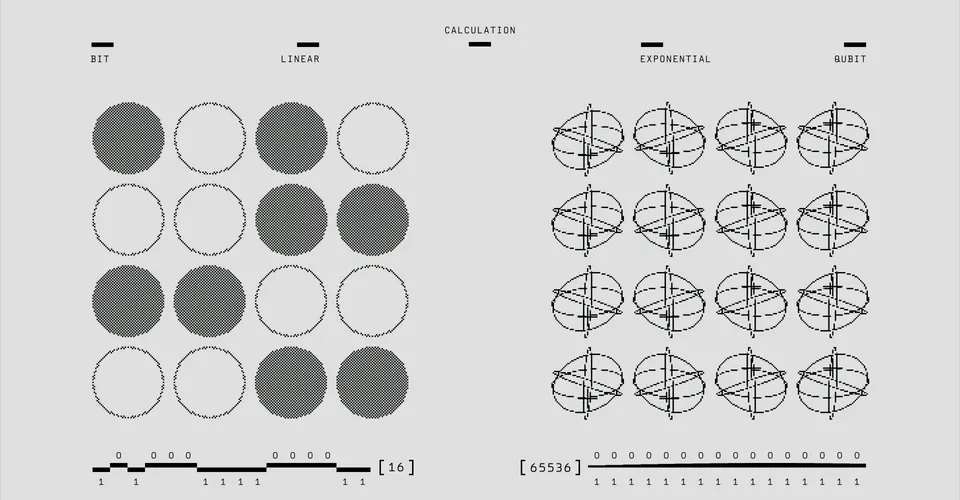
The year is 2025, and we’re watching the tech industry make three completely different bets on its own future—and they’re all revealing something uncomfortable: the old playbook doesn’t work anymore.
Last week, security researchers confirmed the first ransomware family that’s quantum-safe. Let that sink in. We’ve been treating quantum computing as a theoretical threat that lives in some 2030s doomsday scenario. Meanwhile, actual criminals are already building for it. Not because quantum computers are here—they’re not—but because they’re close enough that the economics have flipped. Ship ransomware today that’ll still work when everything gets decrypted in five years, and you’ve got an asymmetric advantage. This is what happens when the threat moves from “could happen” to “inevitable.”
But here’s where it gets properly weird.
 Photo by Google DeepMind / Pexels
The Encryption Paradox Nobody’s Talking About
Everyone freaked out about post-quantum cryptography because we assumed AES-128 would shatter like glass the moment a real quantum computer showed up. Turns out that was security theater. Recent analysis confirms that AES-128 is actually fine in a post-quantum world. The math holds. You don’t need to burn your infrastructure to the ground.
This matters because it means the panic we’ve had for three years was partly manufactured. The real threat was always more specific: the cryptosystems we use for key exchange and digital signatures—RSA, elliptic curve crypto—those are genuinely broken by quantum computers. AES was never the problem.
So why is ransomware already quantum-safe if the actual risk window is still years away?
My read: criminals are solving for a different problem than we are. They don’t care about theoretical safety margins. They care about durability. A ransomware payload that works for seven years instead of one is a business asset worth protecting. It’s the criminal version of long-term thinking—something Silicon Valley talks about constantly while optimizing for quarterly earnings.
Meanwhile, Microsoft just had to issue emergency patches for ASP.NET on macOS and Linux. That’s not quantum-related. That’s just Tuesday in the modern supply chain. We’re fighting a two-front war: the existential threats that haven’t arrived yet, and the mundane ones that never stopped coming.
 Photo by UMA media / Pexels
The CPU Trap Meta Just Walked Into
Here’s something nobody predicted correctly: Meta is buying millions of Amazon’s custom CPUs for AI workloads, not GPUs.
This isn’t a chip shortage workaround. This is a fundamental repositioning. For the last five years, the entire industry assumed AI meant GPUs—Nvidia, custom silicon, the whole stacking order. But Meta’s move signals that the frontier has moved to a different problem: not raw compute for training, but efficient inference at scale for agentic workloads.
CPUs are cheaper. They’re more power-efficient for certain tasks. And they’re not locked into Nvidia’s ecosystem.
What’s actually happening here is that Meta looked at the economics of running AI agents (not just language models, but systems that interact, decide, and act) and realized that GPUs are overkill for most of the operations. Inference, context switching, multi-step reasoning—these don’t need 80GB of VRAM. They need something different.
This is Meta placing a bet that the next phase of AI isn’t about who builds the biggest training clusters, but who can run the most intelligent systems most cheaply in production. It’s a bet against the Nvidia monopoly and implicitly a bet that frontier model performance has plateaued enough that efficiency matters more than raw power.
I’m not sure that’s right yet. But if it is, every other tech company just woke up late to a transition they didn’t see coming.
DeepSeek’s Actual Threat
Then DeepSeek drops a new model and casually says it’s “closed the gap” with frontier models on reasoning benchmarks.
They claim architectural improvements make it both more efficient and performant than their previous version. This isn’t the first time DeepSeek has made noise—but the timing is deliberately provocative. Months after OpenAI got cocky, months after every major lab invested in scaling laws, someone comes in with a different approach and compresses the gap.
What I want to know: are they actually ahead on reasoning, or ahead on the benchmarks we use to measure reasoning? Because those are different things.
The threat DeepSeek poses isn’t that they’ve solved AI. It’s that they’ve proved you can get very close to state-of-the-art without the capital intensity everyone else is betting on. That’s a markets problem, not a science problem. And markets problems are the ones that actually change industries.
The Spyware Wildcard
Buried in the news was something properly dark: another spyware maker caught distributing fake Android apps. Government authorities—unfriendly ones—used a deceptive app to plant surveillance software. The company building it wasn’t even known to do this kind of work before.
This matters for exactly one reason: the spyware industry is moving faster than the security industry can document it. We’re finding evidence of capabilities and actors we didn’t know existed. That’s not a sign we’re winning. It’s a sign we’re fighting blind.
That $15 million crypto exchange heist attributed to “unfriendly states” should probably be read the same way. Not as isolated theft, but as testing ground for techniques that’ll scale.
 Photo by Monstera Production / Pexels
What This All Means Together
You’re looking at a tech industry in genuine transition, and nobody’s actually in control of the narrative anymore.
The cryptography bets we made are held together by luck and math that still works, but only for specific problems. The chip bets are fracturing away from monolithic GPU strategies into fragmented, task-specific solutions. The AI bets are splintering between “biggest models” and “cheapest models that work.” And the security bets are failing daily against adversaries with better resources, creativity, and time horizons than we assumed.
This is what happens when a technology matures from “unprecedented” to “normal operational problem.” You stop having one answer.
The quantum-safe ransomware isn’t here because the threat is imminent. It’s here because imminent has become unprofitable to ignore. Meta’s CPU play isn’t here because GPUs failed. It’s here because the next phase requires different thinking. DeepSeek’s closure of the gap isn’t a reflection of Chinese competence suddenly arriving—it’s confirmation that frontier model development has enough slack in it that alternative approaches work.
What I think happens next: the industry fractures further. Not catastrophically, but seriously. We’ll see more companies making bets that contradict each other, and some will win while others blow up. The winners won’t be the ones who guessed right about which technology mattered. They’ll be the ones who were willing to hedge across multiple futures and move fast enough to change course.
The thing that keeps me up at night isn’t any single problem. It’s that we’re solving them all in parallel without a coherent strategy, and at some point that catches up with you.
What I’m Watching
-
Quantum-safe deployment rates at major enterprises through Q3 2025. Not the hype, the actual upgrades. If RSA key replacement starts happening en masse before 2027, the threat timeline compressed. If it doesn’t, we’re still coasting on denial.
-
Meta’s AWS CPU burn rate and performance benchmarks. Specifically: are they actually getting 3x efficiency gains on agentic workloads, or is this a sunk-cost escalation? If other labs start copying the move by summer, it’s real. If they keep doubling down on GPUs, it’s a one-off.
-
DeepSeek’s next model release timeline. How long until they release again? Every month of silence means they’re either scaling (bad news for everyone else) or hitting the wall (means the gap they closed was narrower than claimed). The velocity of iteration is the real tell.
-
Enterprise spyware exposure discovered through incident response, not academic research. Are companies finding out about government-grade surveillance because researchers published it, or because it started affecting their operations? If the latter, we’re in reactive mode, which is where you lose.