The Stock Market's Weird Split Personality Is About to Get Weirder
Equities are soaring on earnings beats and AI hype, but investors are ghosting dividends. That disconnect won't last—and when it snaps, someone's getting hurt.
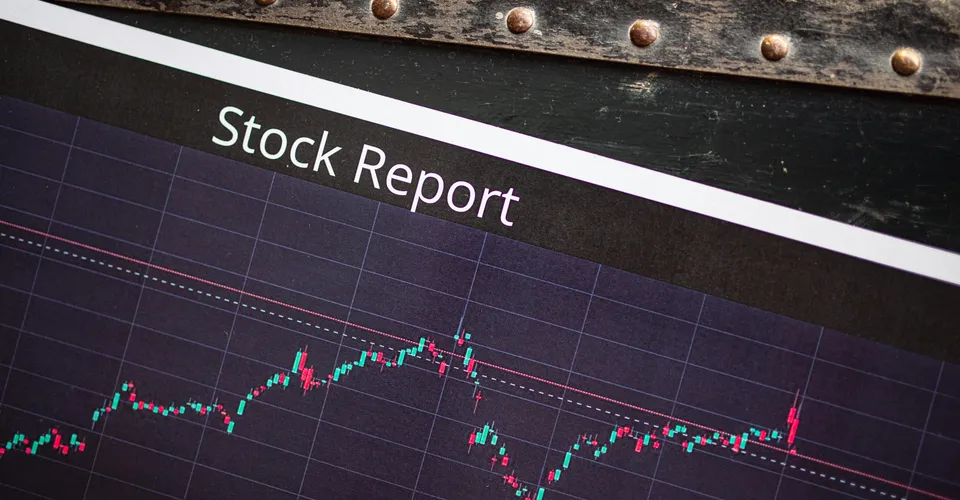
The stock market is throwing a party. Record highs, Apple crushing earnings guidance, rare earth stocks jumping 18%, AI plays soaring 17%—it’s the kind of week that makes CNBC anchors giddy and retail investors check their portfolios at 3:59 p.m. like they just won the lottery.
But here’s what’s creepy: nobody wants to actually own the dividend.
This isn’t some academic debate about valuation. This is a fundamental mismatch between what’s happening in equity prices and what’s happening in investor behavior. The stock market is euphoric. The dividend market is despondent. And that’s a setup for something ugly.
The Earnings Blitz Masks a Deeper Problem
Apple’s 17% revenue growth and beat on guidance should be the story. It is the story—for about 47 minutes on CNBC, then it’s buried. But let’s actually look at what’s working: tech that can scale, AI optionality, companies with pricing power. Apple’s iPhone sales came up short. Their Mac demand is booming. That’s the market repricing growth expectations in real time.
Same pattern everywhere else. USA Rare Earth jumps nearly 18% on “broader market optimism” and “high-growth positioning.” Lightwave Logic climbs 16.7% on, yes, the “booming AI.” These aren’t fundamental stories—these are flows chasing narratives. And the narrative right now is simple: growth at any price, income at no price.
The Dow Jones futures are rising. Oil is moving on geopolitical chatter about Iran ceasefires and the War Powers Resolution clock. Normally that’d be noise. Right now it’s a pulse check on risk appetite.
 Photo by RDNE Stock project / Pexels
The Dividend Silence Is the Actual Warning Sign
Here’s what nobody’s talking about: investors are driving equities to record highs while simultaneously being “less enthusiastic about dividend payouts.”
That’s not a nuance. That’s a choice. And it’s the wrong one.
When the market separates total return (capital appreciation) from yield, you’re basically saying: “I believe stock prices will go up infinitely without regard to the cash those companies actually generate.” That works for exactly as long as the next guy believes it too. Once he doesn’t—and he will—you’re holding a bag of air.
My read is this signals a market that’s trading momentum, not value. The people buying USA Rare Earth at $25.97 aren’t modeling out a dividend discount model. They’re checking Stocktwits. The people selling dividend yields are doing the same math a Gen-X retiree used to do—and losing money for it.
Think back to 2021. Same pattern. Meme stocks ripping, dividend aristocrats getting scorched, everyone talking about “disruption” and “secular growth.” By September 2022, that unwound with the kind of violence that still makes hedge funds flinch.
Citi’s 13th Restructuring Is Just Noise—or Is It?
Jane Fraser’s taking over Citigroup again with restructuring round 13. Let’s be honest: nobody has any confidence that this will actually work. Citi’s been the industry’s punching bag for years. But here’s the thing—if she pulls it off, what does that say about the broader market’s ability to price in turnarounds?
I don’t think she pulls it off. But I also don’t think Citi’s the issue here. The issue is that we’re in a market where a megabank can be in chaos for a decade and nobody cares because Apple’s growing 17%.
 Photo by Markus Spiske / Pexels
The Geopolitical Tail Is Wagging the Energy Dog
Oil’s moving on ceasefire talk. Specifically, the White House saying an Iran ceasefire halts a 60-day war deadline under the 1973 War Powers Resolution. That’s… actually pretty specific, which means someone’s taking it seriously enough to move crude.
Energy stocks aren’t rallying into record highs with tech. That’s your tell. The market’s saying: “I like growth, but not if it comes with a disruption premium.” So crude can move on geopolitical headlines without energy equities catching a bid. That’s a market pricing in demand destruction if things escalate—not confidence in higher oil prices.
For now, lower oil prices are helping the equity narrative (cheaper gas, less inflation, more buyback capacity). But the moment that reverses, you’ll see equity enthusiasm flip like a light switch.
What This Actually Means
I think we’re in a phase where the market is aggressively mis-pricing risk across three dimensions at once.
First, duration. Long-term equity returns without dividend cash flow is a bet on terminal value being infinitely higher. That’s not investing. That’s speculation with a 401(k) wrapper.
Second, concentration. Apple, Magnificent Seven, AI picks—they’re carrying the whole market. The Dow’s up on these moves, not on 29,000 other stocks rotating. When concentration cracks, breadth cracks with it.
Third, mean reversion. Dividend yields haven’t been this unpopular relative to equity price momentum since late 2021. That’s not a coincidence. That’s a calendar entry for October.
My prediction: By Q2 2025, dividend stocks will start outperforming on an unwind of this exact trade. It won’t be pretty—it’ll be the kind of whipsaw that catches people holding USA Rare Earth at $26 while their Procter & Gamble position quietly compounds. The people who bought Lightwave Logic for the AI boom will wonder why their dividend ETF suddenly looks interesting.
I can’t tell you exactly when. But I can tell you this market’s internal contradictions are growing louder. You can’t indefinitely have records equities and dour dividends. One of those expectations has to break.
What I’m Watching
-
Apple’s next earnings and guidance. If Mac demand stalls or iPhone comes back short, watch how quickly the “growth” narrative evaporates. That’s your canary.
-
Dividend yield spreads versus Treasury rates. When the 10-year yield is 4.3% and corporate dividend yields are in the low 2s, that gap is a ticking clock. Once it compresses below 200 basis points, flows reverse hard.
-
Breadth metrics—specifically the advance/decline line. If the Dow and Nasdaq are hitting records while the Russell 2000 treads water, that’s concentration risk. Watch for a week where 60% of S&P 500 stocks are down on a day the index closes higher. That’s your warning.
-
Energy and infrastructure rotations. If dividend yields suddenly stop getting punished and energy/utilities start catching bids despite lower oil, the game’s changing. Set alerts for XLE and VYM diverging north by more than 3%.
The party’s real. The fundamentals in pockets are real. But the market’s psychological state isn’t. And psychology always wins until it doesn’t.