The Strait of Hormuz Is Becoming a Flashpoint Again—And Nobody's Ready
Iran's tightening grip on global shipping, a dead French peacekeeper, and what happens when great powers stop pretending diplomacy works
There’s a moment in every foreign correspondent’s career when you realize the playbook everyone’s been following just got tossed in the trash. We’re in one now.
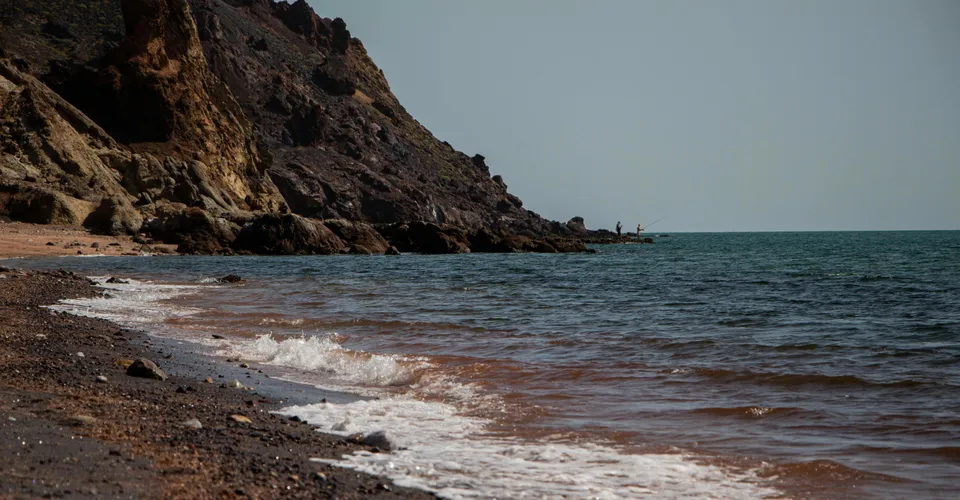
Iran just declared it’s reimposing “strict control” of the Strait of Hormuz. That’s not diplomatic language. That’s a military announcement. Two ships have already been hit—one by gunfire from an Iranian gunship, one by something unidentified. The Islamic Revolutionary Guards Corps isn’t hiding behind denials anymore. They’re being explicit about tightening their grip on the waterway until the U.S. lifts its blockade of Iranian ports.
This is different from the usual saber-rattling.
For context, roughly 21% of global petroleum passes through that 33-mile-wide strait. When Iran threatens it, they’re not just tweaking Washington. They’re holding a gun to the global economy’s head. The last time tensions got this hot was 2019, when the U.S. assassinated General Qasem Soleimani and Iran retaliated with missile strikes. We got lucky then—no American casualties, markets stabilized after a day of panic. This feels less like posturing.
 Photo by Melika Hazrati / Pexels
The Iran Calculation
Here’s what Iran knows: the U.S. is bleeding resources in Ukraine. Trump administration officials are talking about ending the war there, not escalating conflicts elsewhere. China’s economy is stalling. Europe’s fractured. There’s a window where Iran can push harder without facing the full weight of American military dominance—and they’re walking through it.
The “mosquito fleet” isn’t a joke. Revolutionary Guards boats are cheap, fast, and numerous. They’re hard to target without collateral damage to commercial shipping. Even if the U.S. wanted to launch surgical strikes, the political cost of disrupting 21% of global oil would be catastrophic. Oil prices spike, inflation returns, consumers notice at the pump. No administration wants that.
My read: Iran’s testing whether the current geopolitical moment lets them negotiate from strength rather than weakness.
 Photo by Mathias Reding / Pexels
Meanwhile, in Lebanon
A French peacekeeper got killed in southern Lebanon. Macron blamed Hezbollah immediately. Hezbollah denied it, of course.
Here’s the thing nobody talks about enough: peacekeepers are supposed to be neutral. They’re supposed to survive because both sides have no interest in touching them. When they start dying, it means the conflict’s moved past the point where everybody agrees on the rules. It means we’re not actually keeping peace anymore—we’re just standing between people who’ve decided the status quo is unacceptable.
Macron blamed Iran’s proxy. Hezbollah said no. Neither side is lying entirely. Lebanon’s a pressure cooker. Israel’s been making moves. The U.S. is distracted. France is losing people for a ceasefire nobody really respects.
The Pope Problem (And Why It Matters)
This is going to sound weird, but stick with me. The Pope said his recent comments weren’t criticism of Trump. He’s walking it back publicly. But the fact that he felt compelled to clarify suggests the Trump administration pushed hard.
Why does the Vatican matter in a foreign affairs analysis? Because it’s one of the last institutions that still operates as a genuinely independent mediator between superpowers. When Trump administration officials lean on the Pope to stay out of U.S. politics, they’re signaling something: they’re not interested in mediation right now. They want alignment.
That’s a change in tone from previous administrations. It suggests a go-it-alone approach that makes diplomacy harder when you actually need it.
Spain’s Weird Luck
Pedro Sánchez, Spain’s leftist Prime Minister, is getting a political boost because Trump is attacking him. Domestically, Sánchez was drowning. Internationally, he’s suddenly a hero to the left for “standing up” to an American president. Trump’s essentially given Sánchez a gift—a way to rebrand his domestic struggles as standing on principle.
This is strategically stupid on someone’s part. I’m not sure whose. But it shows how fractured the West has become. We’re not coordinating. We’re not even pretending to coordinate. European leaders are figuring out how to use American aggression to solve their own political problems.
What’s Actually Happening
Strip away the headlines and you’re left with this reality: the institutions and norms that kept the post-Cold War order functioning are degrading faster than anyone expected. Peacekeeping operations aren’t peacekeeping. Diplomatic channels are closing. Economic coercion is being met with economic counter-coercion. Regional powers are testing whether they can move in this environment.
I’ve covered enough conflicts to know what this looks like. It looks like the moment before things accelerate. Not necessarily into war everywhere, but into a period where stable deterrence breaks down and everybody’s calculating odds they haven’t had to calculate in decades.
The Strait of Hormuz is the best proxy for this. It’s the moment where economic interests and military capability intersect directly. Iran controls the geography. The U.S. controls the navy—or thinks it does. But that navy can’t be in 15 places at once, and Iran’s figured out it doesn’t need to win militarily. It just needs to make the cost of winning prohibitively high.
The Honest Uncertainty
I should be clear about what I don’t know: I can’t predict whether Iran actually escalates to shutting down shipping, or whether this is negotiating theater. I can’t tell you whether the U.S. has a plan for the Strait that doesn’t involve economic catastrophe. I can’t guarantee this doesn’t blow over in three months with a deal nobody talks about.
What I can tell you is the baseline has shifted. The default assumption used to be: escalation is bad for everyone, so it probably won’t happen. That assumption’s weaker now. The default assumption now is: countries will push until they hit actual resistance, and nobody’s sure where that resistance actually is.
That’s riskier.
What I’m Watching
The Strait of Hormuz shipping data. Specifically: are insurance premiums for transit rising? Are shipping companies rerouting around the Cape of Good Hope (the long way, adds weeks)? If either happens, it means the market thinks Iran’s serious. Once that happens, pressure mounts on every government to “do something.”
French military deployments in Lebanon. Macron’s not going to leave peacekeepers in a place where they’re getting killed without response. Watch for whether France escalates unilaterally or tries to coordinate with the U.S. If they go alone, the Lebanon situation becomes even messier. If they coordinate with Trump’s team, we know something bigger’s being negotiated.
Oil prices through Q2. If Brent crude stays above $85/barrel for more than a month, it signals the market’s pricing in real risk from the Strait. Below that, and traders think this is theater. The price is the market’s honest assessment of probability.