The Violence Around Us Is Now Just Background Noise
A shooting at the White House correspondents' dinner exposes how normalized political terror has become—and why that should terrify us more than the gunfire itself
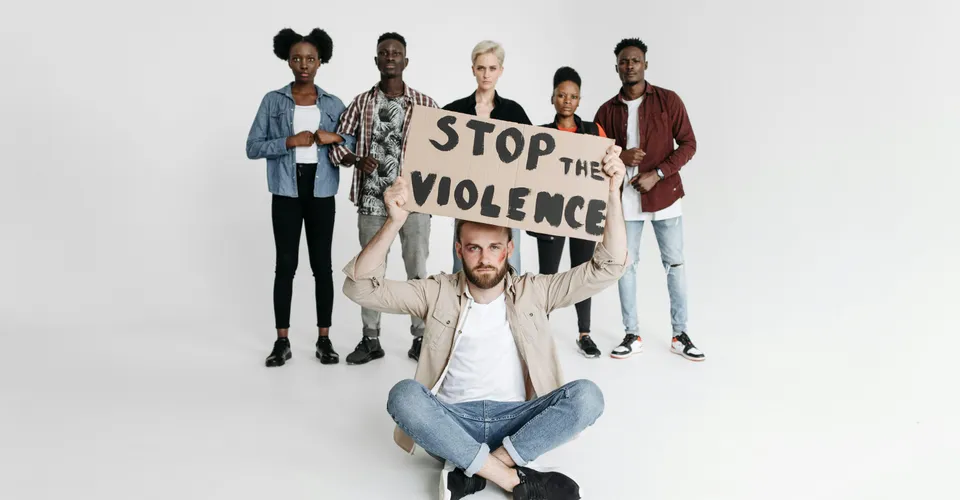
Saturday night’s shooting at the White House correspondents’ dinner wasn’t really an aberration. It was a symptom we’ve stopped treating seriously.
A man with a Caltech degree and a tutoring background opened fire at one of Washington’s most exclusive gatherings. The fact that I need to describe him in those particular terms—educated, employed, seemingly ordinary—tells you something about where we are. We’re no longer shocked by the who. We’re just cataloging the details like a coroner’s report.
What got to me wasn’t the gunfire itself. It was this line from the coverage: “Many Guests Bore the Scars of Political Violence.” We’ve actually developed a measurable cohort now. A club. An expanding club of political figures whose lives have been fundamentally altered by someone deciding violence was communication.
This is the thing nobody wants to say out loud at cocktail parties: we’re living in an era where political assassination attempts and mass shooting attempts at symbolic venues have become common enough that we have returning members.
 Photo by Pavel Danilyuk / Pexels
The Numbness Economy
Here’s my honest read: we’re experiencing a kind of psychological Stockholm syndrome with violence. The shooter at the correspondents’ dinner gets arrested, we all feel that familiar spike of adrenaline, and by Monday morning the news cycle has moved on to whether King Charles will be safe during his US state visit (Trump says he will be, by the way, after security talks). By Tuesday, we’re talking about Starmer defending himself against Tory accusations over Mandelson vetting.
The violence doesn’t solve anything. It doesn’t change policy. It doesn’t even trend for 72 hours anymore. It just adds another name to the list.
I’ve covered enough elections and scandals and crises to know that political violence used to be the thing that shut everything down. In 1963, Kennedy’s assassination literally stopped the country. In 1981, Reagan got shot and it rippled through every conversation for months. Now? A gunman opens fire at one of the most important dinners in Washington and we’re already asking about supply chain disruptions related to potential Iran conflicts.
That’s not resilience. That’s dissociation.
 Photo by Andrew Neel / Pexels
What Actually Matters in That Room
Esther Ghey—mother of a murdered teenager—is trying to get the Prime Minister to hear from bereaved families on online safety. She’s competing for attention with tech giants and industry lobbyists. She’s right that it’s “equally important” the PM listens to people who’ve actually lost someone. But here’s the thing: she’s having to argue for that equal importance. That’s the political moment we’re in.
Meanwhile, in California, Sergey Brin—the Google co-founder who once backed liberal causes—spent $57 million trying to block a billionaire tax and has started praising Trump. This is notable because it shows you where money flows when political violence becomes background noise: toward security, toward power consolidation, away from the systems that might address root causes.
United Airlines tried to merge with American Airlines and got shut down. That’ll probably matter more to your airline ticket prices than the shooting will. That’s not cynicism. That’s just math.
The Iran Question Nobody’s Ready For
Here’s what I’m genuinely uncertain about: if Iran escalates and we see eight months of price hikes—as one UK minister just flagged—how does that intersect with the normalization of political violence? Do economic pressures create more Cole Thomas Allens, or fewer? Do people get too tired to be angry?
The government’s already monitoring stock levels and planning for supply chain disruptions. That’s the actual preparation happening. Not for the violence. For the inflation that might follow it.
This is where I think Washington gets it wrong. We spend enormous energy on the spectacle—the shooter, the security protocols, the state visit choreography—and almost no energy on the conditions that make people decide violence is their best argument.
My Prediction
I think we’re going to see three more incidents like this before anything structural changes. Not because I want to be Cassandra. Because that’s the historical pattern. You need a critical mass before the immune system kicks in.
The Lib Dems are offering £5,000 rewards for illegal waste tip-offs because councils face environmental emergencies. That’s actual policy response to a real problem. It’s not glamorous. It doesn’t get TV coverage. But it’s how government actually works—by addressing the grinding, unglamorous failures that create desperation.
Political violence is the glamorous failure. Everyone notices it. Nobody does anything about it. And I think that’s going to keep happening until we collectively decide that understanding why someone chooses violence is more important than just counting the bodies.
 Photo by Tara Winstead / Pexels
What I’m Watching
-
The security protocols for King Charles’s state visit. Trump said Charles will be “very safe” after security talks. Watch whether those protocols are significantly different from pre-Saturday procedures. If they’re basically the same, it confirms we haven’t actually changed our threat assessment. If they’re substantially different, it suggests we finally recognize the pattern.
-
How long Esther Ghey stays in the conversation about online safety policy. If bereaved families get a real seat at the table for the Online Safety Bill implementation by March 2025, that’s a sign politicians are taking prevention seriously. If she’s still fighting for equal attention by summer, we’re back to business-as-usual.
-
Sergey Brin’s next political move. A Google co-founder spending $57 million to block taxes while praising Trump is betting on a particular direction for American politics. Watch whether he gets more or less involved in 2025. If he doubles down, it’s a signal that even centrist Silicon Valley sees the political ground shifting. If he retreats to foundation work, it means even the money recognizes this is unstable.
-
Whether the Iran disruption scenario actually materializes and how Congress responds. Eight months of price hikes would hit consumers hard. That’s the kind of economic pressure that has historically preceded political violence spikes. If we see inflation plus continued violence rhetoric, we’re in genuinely dangerous territory. Watch for Congressional hearings about prevention in Q2 2025.
The shooting at the correspondents’ dinner will be forgotten by most people within a month. That’s not a reflection on the tragedy. It’s a reflection on us. And that should worry you more than any individual gunman ever could.