The World Is Breaking Into Regions. Watch What Happens Next.
From Ukraine to the Amazon, the global order is fracturing along resource and security lines. Here's what actually matters.

Trump rejected Iran’s peace proposal before even reading it. Meanwhile, Zelensky’s been jet-setting through the Gulf to show he’s still a player. Germany’s cutting troops while Republicans scream it’s a betrayal. Russia keeps bombing Ukraine. South Africa’s attacking Nigerian migrants. China’s AI is killing jobs. The Amazon’s being ransacked for minerals nobody knew they needed last year.
These aren’t separate stories. They’re chapters in the same book: the slow-motion collapse of a world that thought it could ignore resource scarcity, treat alliances as optional, and pretend corruption happens somewhere else.
 Photo by Elias Strale / Pexels
The Iran Thing Is About Domestic Politics, Not Diplomacy
Let’s start with what didn’t happen. Iran sent over a peace proposal. Trump said he “could not imagine it would be acceptable” before even reading it Saturday. That’s not negotiation. That’s theater.
Here’s what matters: Trump’s already decided the answer is no. The actual content of Iran’s proposal became irrelevant the moment he decided the optics of rejecting it played better at home than considering it. This is how deals don’t get made—not because they’re inherently impossible, but because political leaders calculate that the domestic audience rewards intransigence more than compromise.
The Iranian government, for its part, knows this too. They’re not naive. But they need to be able to tell their own public: “We tried.” It’s mutual theater. Both sides performing for an audience that will never see behind the curtain.
What this tells me: Don’t expect a breakthrough here. The structural incentives for both sides are pointing away from the table.
Ukraine’s New Pivot Shows How Wars Reshape Alliances
Zelensky’s been visiting the Gulf. That’s significant in a way that doesn’t make the evening news.
The headline says Ukraine’s been hitting Russian oil tankers and terminals—part of what Kyiv calls Russia’s “shadow fleet.” Meanwhile, Zelensky’s making the rounds in the Gulf, presumably showing off Ukraine’s military capabilities and looking for new patrons now that Western attention is fracturing.
Here’s what’s actually happening: Ukraine has accidentally become a testing ground for drone warfare, and the Gulf states are watching closely. They’ve got money, they’ve got conflicts brewing, and they’re seeing in real-time what a smaller nation with good drone operators can do to an enemy’s oil infrastructure. That’s not lost on Saudi Arabia or the UAE, both of whom are intimately aware of how vulnerable their own tankers and terminals are.
The Iran war—which is what the Ukraine-Russia conflict effectively is at this point, given Iran’s role supplying drones—has taught the Gulf something valuable: oil facilities are no longer sanctuaries. Zelensky visiting isn’t about begging. It’s about teaching. And Gulf states are interested in that knowledge.
Whether this tips toward a ceasefire in Ukraine? My read is: not yet. But the calculation’s shifting. If Zelensky can convince Gulf money that Ukraine’s still worth backing because Ukraine’s proven it can hurt Russia’s economy, he’s bought himself runway.
 Photo by Markus Winkler / Pexels
Germany’s Troop Cuts Are a Statement About Europe’s Future
Five thousand troops sounds like a number. It’s not. It’s a choice.
The House and Senate armed services committee chairs say withdrawing those personnel “risks undermining deterrence.” They’re right. But that’s not why Germany did it. Germany did it because Germany’s broke and needs its defense budget for other things, or it did it because Berlin thinks the threat assessment has changed, or it did it for domestic political reasons.
The truth? Probably all three. And that’s the real story: the NATO architecture that survived 30 years was built on the assumption that Europe’s wealthiest nation would stay maximally committed to forward defense in the East. That’s cracking.
This isn’t yet alliance collapse. But it’s the sound of someone opening a door they’re not sure they want to close, wondering if maybe the lock’s gotten easier to turn than it used to be.
Russia’s watching this the way a hyena watches an animal with a limp. Not quite ready to strike, but noting the weakness.
The Real War Is Over Resources, Not Territory
Now here’s where the headlines stop being disconnected.
The Amazon rainforest is being destroyed by criminal gangs hunting for rare earth minerals. These minerals build drones and electric vehicles. Meanwhile, Ukraine’s using drones to destroy Russia’s oil fleet. Zelensky’s in the Gulf because oil matters. Germany’s cutting defense spending because budgets matter. Iran’s proposing peace because sanctions on its oil revenue are killing it.
It’s all minerals, oil, and the infrastructure that moves them.
Global demand for rare earth minerals is surging. That surge is driving criminality in the Amazon. That criminality is destabilizing governance. That destabilization makes those regions vulnerable to other powers. And round it goes.
The world doesn’t have enough rare earth minerals for everyone to have what they want right now. So countries are going to be more aggressive about securing them. Ukraine’s drone campaign is partly about hitting Russia’s energy exports—a shortcut to economic pressure. The Gulf states are watching because their oil monopoly is eroding. And the Amazon is burning because someone’s got to dig the minerals up, and the people doing it don’t ask questions.
I think we’re going to see explicit “resource wars” framed as something else within 18 months. Not shooting wars. But explicit diplomatic and economic crusades aimed at controlling access to cobalt, lithium, rare earths, and phosphates. It’s already happening in Africa. It’s just not called that yet.
The Corruption Story Nobody’s Talking About
The U.S. indicted a Mexican governor. This has “strained cross-border relations” and given President Sheinbaum a thorny choice.
What that really means: The U.S. is willing to indite foreign leaders for corruption. Mexico now has to decide whether to extradite and lose political capital at home, or refuse and damage the relationship with its largest trading partner. It’s a trap disguised as justice.
This matters because it’s not unique. The U.S. has leverage over Mexico. The U.S. uses that leverage. Other countries are watching to see if Mexico capitulates or resists. If Mexico resists, that’s a signal. If Mexico complies, that’s a different signal—one about who actually runs things.
Nigeria’s summoning South Africa’s envoy over attacks on Nigerian nationals. That’s a smaller version of the same dynamic. Weaker countries getting pushed around by slightly-less-weak countries. South Africa’s got xenophobic mobs. Nigeria’s got leverage (oil, population, regional clout). Nigeria’s using it.
These aren’t separate incidents. They’re symptoms of a system where countries are learning that cross-border leverage—whether through indictments, sanctions, or public shaming—gets results faster than asking nicely.
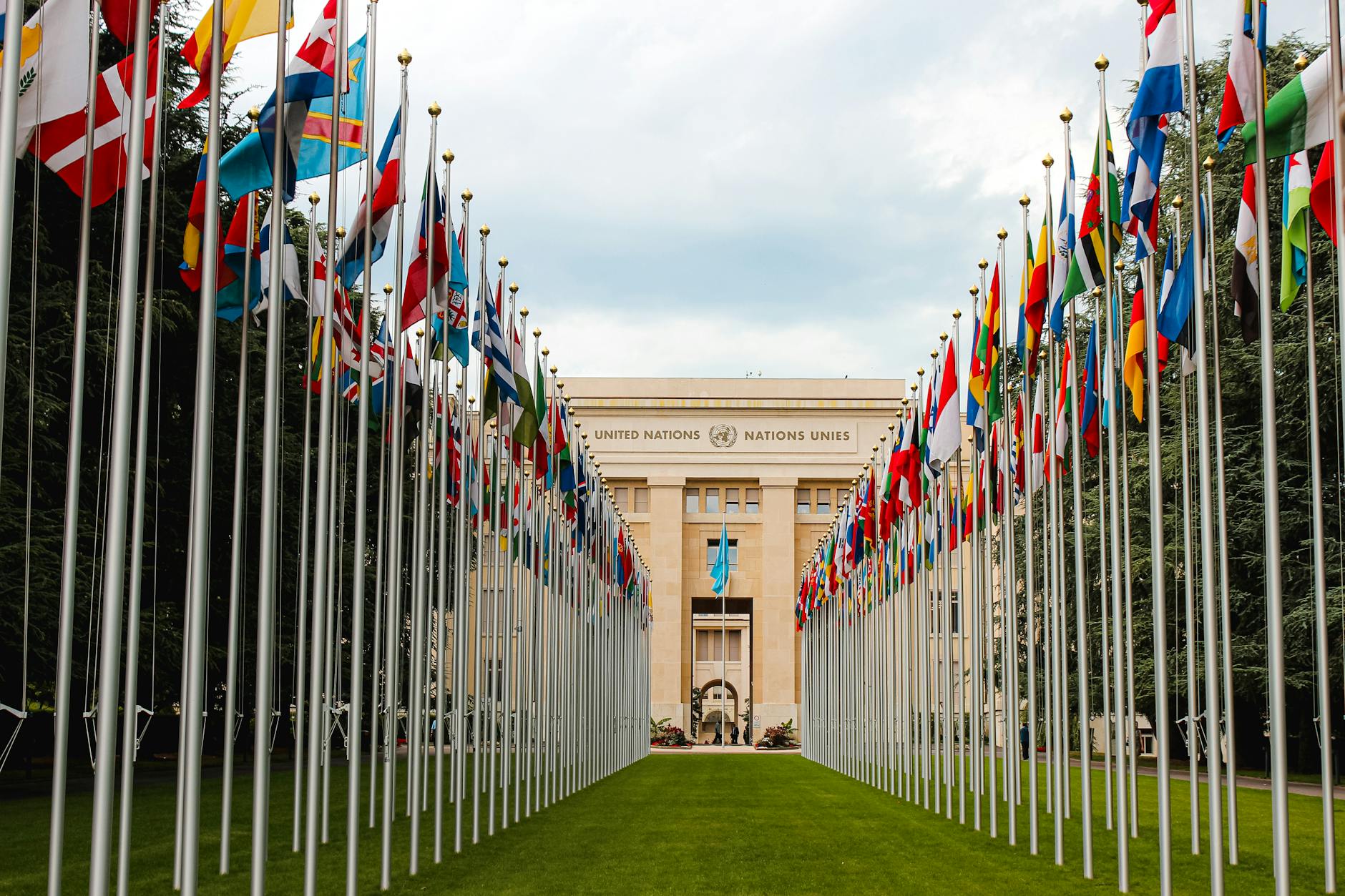 Photo by Mathias Reding / Pexels
What I’m Actually Uncertain About
I can connect these dots. But here’s what I genuinely don’t know: whether the fracturing I’m seeing is accelerating toward actual conflict, or whether it’s simply the new normal—a world of constant friction that never quite boils over into shooting wars.
The fact that we’ve got 30 years of relative peace despite constant tensions suggests the incentive structure works. Nobody wants a real war with anyone else. But incentive structures can shift fast. One miscalculation—one shot fired that was meant to be a warning—changes everything.
India’s election results matter more than people realize. Over 154 million people just voted in state elections. The results can “tilt the balance of power for the whole country.” That’s a swing state moment. If Modi loses leverage, India becomes less reliable as a counterweight to China. If Modi gains it, China feels more pressure. Either way, India’s pivot between blocs just became more volatile.
China’s AI industry is replacing actors. That sounds trivial until you realize it’s a dry run for replacing expertise. If you can generate a celebrity’s likeness without permission, you can generate a scientist’s paper without truth. The legal battles over AI-generated content are preview trailers for wars over AI-generated information.
What I’m Watching
Trump’s next move on Iran (next 60 days). If he moves toward sanctions escalation rather than negotiation, watch for Iranian retaliation against Gulf shipping. That’s not just a bilateral problem—that’s a chokepoint.
Whether Mexico extradites that governor (within Q1 2025). This is the test case for whether smaller democracies still have agency when the U.S. flexes. The answer determines how much cross-border cooperation actually exists going forward.
Rare earth mineral prices and Amazon deforestation correlation (ongoing). If prices spike above $X threshold, criminal activity in the rainforest will spike simultaneously. That’s not cause and effect—it’s a signal. When prices spike, watch for new violence in Peru, Brazil, and Colombia. That’s where your next destabilization event lives.
German military presence in Eastern Europe (by Q2 2025). Are those troop cuts actually happening, or was this political noise? If they’re happening, NATO’s forward deterrence just got measurably weaker. Russia will test it.
The world isn’t ending. It’s reorganizing. And the rules we thought were permanent are turning out to be more like suggestions that only mattered when everyone agreed to follow them.