The World's Broken Ceasefire Machine
From Iran to Ukraine to Lebanon, every diplomatic off-ramp is collapsing at once. Here's what that actually means.
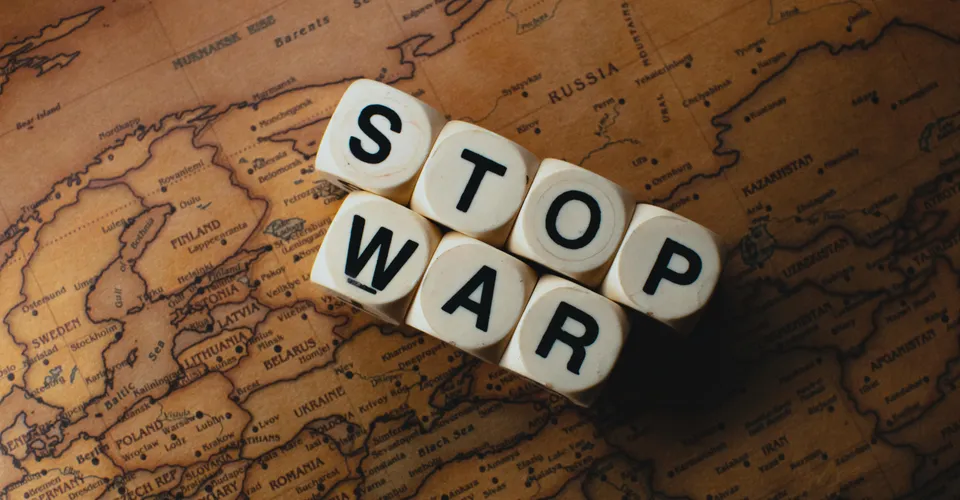
The pattern’s become impossible to ignore. We’re not watching individual crises anymore. We’re watching a system fail.
In Tehran, Pakistani diplomats are shuttle-hustling between Iran and the US, trying to prevent what everyone knows is coming: another round of escalation that’ll make the last one look quaint. Meanwhile, Russian missiles are shredding Ukrainian civilians in the biggest attack in months, and the “temporary cease-fire for Orthodox Easter” that some optimists were whispering about has already evaporated like morning dew. In Lebanon, satellite imagery shows over 1,400 buildings destroyed since March 2nd. Not damaged. Destroyed.
The word “fragile” keeps appearing in dispatches from Tehran. It’s doing a lot of work in that sentence.
 Photo by Nothing Ahead / Pexels
When Every Negotiation Hits a Wall
What’s eerie is how synchronized this all is. You’d think geopolitical crises would spread unevenly across time—one burns hot while another cools. Instead we’re seeing them all reach a critical temperature simultaneously, like someone turned up the global thermostat in March.
The Iran situation is the clearest example. BBC correspondent Lyse Doucet’s reporting from inside Iran describes a population gripped by the question everyone’s asking: “Can a US deal actually be done?” That’s not idle speculation. That’s an entire country watching diplomatic channels and trying to figure out if their government and Washington are actually moving toward something or just performing theater. Pakistan’s involvement—sending delegations to Tehran, promising a second round of US-Iran talks without specifying when—suggests there’s still movement. But “expected to host” and “did not say when” is the language of a process that’s already slipping.
Compare that to Ukraine. There was never even pretense of a broader ceasefire holding. Russia’s just back to full missile bombardment. The Easter pause wasn’t a pathway to negotiation; it was a tactical pause before returning to destruction. Moscow gets to frame restraint as magnanimity, then blame Ukraine when talks don’t materialize. It’s psychological warfare dressed up as diplomacy.
Lebanon tells a different story entirely—one where you can’t even talk about negotiation because the baseline violence is already so normalized. Fourteen hundred buildings. That’s not a conflict. That’s erasure.
 Photo by Markus Winkler / Pexels
The Economic Backdrop Nobody’s Talking About
Here’s what jumped out at me: China’s economy grew faster than expected despite the Iran war. Despite. That word suggests economists thought regional instability would drag down growth. It didn’t.
Why? Probably because Asian supply chains have gotten good at compartmentalizing chaos. You can have a war raging and still move semiconductor shipments. The world’s gotten disturbingly efficient at absorbing conflict as a fixed cost rather than a variable shock.
But here’s what that means for diplomacy: there’s no economic pressure to stop. When the 1973 oil embargo tanked Western economies and forced negotiation, war had immediate economic teeth. Now? China grows faster. Markets adjust. The human cost spikes but the GDP line keeps climbing.
That’s not a sign of resilience. That’s a sign of disconnection.
The Orbán Precedent and Why It Matters
Hungary’s authoritarian leader just got voted out. Corruption and economic mismanagement did what international pressure couldn’t. His political disciples across Europe are watching, trying to figure out how to avoid his specific mistakes without abandoning the authoritarian playbook.
Why does this matter for ceasefire diplomacy? Because it suggests there’s a learning curve among the far-right movements that prop up actors like Putin, Orbán, and others. They’re not repeating identical plays. They’re iterating. They’re getting smarter about when to escalate, when to fake restraint, and how to exploit the fact that democracies take forever to respond while autocracies move in weeks.
Orbán lost because he got sloppy. Everyone else is taking notes on not getting sloppy.
What Malema’s Conviction Tells Us
South Africa just sentenced opposition figure Julius Malema to five years in prison. He’s appealing. The system’s working exactly as it’s supposed to work in a functioning democracy—slow, procedural, with appeals and legal processes.
Meanwhile, in Turkey, police are arresting 83 people for online praise of school shootings after two mass shooting events in a week killed at least nine people. That’s state power moving fast. That’s surveillance and rapid response.
I mention these because they’re symptoms of how differently states are responding to internal pressure. Some are using legal systems to neutralize opposition. Some are using security apparatus to suppress speech. The variety matters because it means there’s no unified global template for how to maintain control anymore. Everyone’s improvising.
And when everyone’s improvising simultaneously, diplomatic channels get messy. You can’t negotiate with a system that doesn’t know its own rules.
My Take
Here’s what I think is actually happening: we’re not in a ceasefire crisis. We’re in a delegation crisis.
The US, Russia, Iran, China—none of their leadership is willing to personally bet political capital on negotiation anymore. So they send subordinates. Pakistani diplomats. Shuttle envoys. Second-tier officials. You know what that means? The “no” is already built in. If talks succeed, the delegation can claim credit. If they fail, the principal can disown the whole thing.
It’s negotiation theater with an escape hatch pre-installed.
My prediction: we’ll get a temporary deal with Iran—probably by Q3—that looks significant but kicks the hard decisions forward another 18 months. It’ll buy enough breathing room for everyone to claim success while changing almost nothing about the underlying tension. Ukraine gets no such deal; Russia’s advantage is too clear. Lebanon’s already past the negotiation stage.
The reason I’m moderately confident about this: Pakistan wouldn’t keep showing up if there was no deal on the table. But Pakistan also wouldn’t be vague about timing if they actually controlled the process. They’re being used as a credibility fig leaf while Washington and Tehran run their own channels.
The Costa Rica Angle
One last thing that stuck with me: a mountain town in Costa Rica is offering sanctuary to families deported by the US. It’s small, it’s pacifist, it’s basically the opposite of how states usually operate. But it’s also exactly what happens when central institutions stop functioning—you get microsolutions in the margins. Local action. Community networks.
When diplomacy fails at scale, people create it at the neighborhood level. That’s not inspirational. It’s a warning sign.
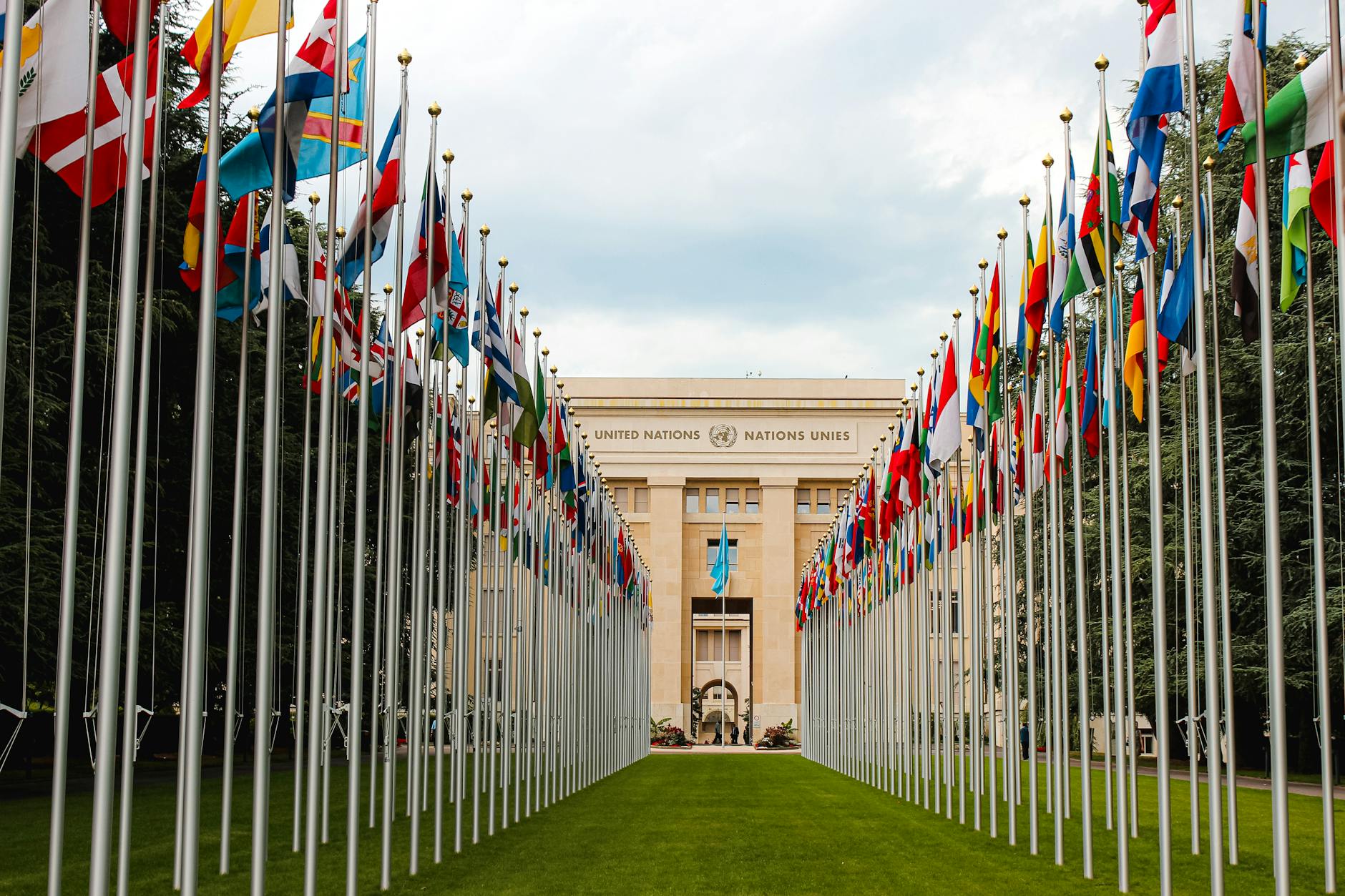 Photo by Mathias Reding / Pexels
What I’m Watching
-
Pakistan’s next statement on Iran talks timing. If they announce a second round date with specificity in the next 30 days, there’s real movement. If they stay vague through May, talks are theater. Watch for language precision, not optimistic framing.
-
Russian strike patterns in Ukraine through May. If the Easter pause was genuinely tactical and restraint returns, that suggests negotiation possibility. If strikes keep accelerating, Russia’s signaling they see no value in off-ramps. Track attack frequency and civilian casualty counts.
-
Lebanese building demolition rates. Satellite imagery showing 1,400 destroyed buildings since March 2nd suggests an average of roughly 20+ per day. If that pace accelerates above 30 per day or drops below 10, it’s a signal about whether this is planned destruction or active military operation—and whether anyone’s actually negotiating limits.
-
Turkish state response to the Malema precedent. Watch whether authoritarian-leaning governments start mimicking South Africa’s legal approach to opposition (slower, procedurally complex) versus Turkey’s security apparatus approach (fast, comprehensive). That’ll tell you which playbook is winning in practice.