When Oil Spikes and Tesla Tanks: Reading the Tea Leaves on Market Resilience
Five weeks into the Iran war, markets are shrugging off $120 oil while stock pickers feast on the chaos. Here's what the divergence really means.
The Strait of Hormuz has been closed for five weeks. Oil’s trading north of $120. Amazon just slapped a 3.5% surcharge on sellers because energy costs are eating their margins alive. And somehow, the stock market finished the week higher.
Welcome to 2026, where nothing makes sense until it suddenly does.
I’ve been trading through enough crises to know when markets are lying to themselves, and when they’re actually processing information better than the headlines suggest. Right now, we’re seeing something fascinating: a market that’s quietly repositioning itself around a new reality while everyone’s focused on the obvious disaster.
Let’s start with what we know. The Iran conflict that kicked off in late February has effectively choked off the world’s most important oil chokepoint. Twenty percent of global petroleum flows through Hormuz on a normal day. That’s been reduced to whatever trickles through under Iran and Oman’s new “monitoring” protocol — which sounds about as reliable as a handshake deal with a used car salesman.
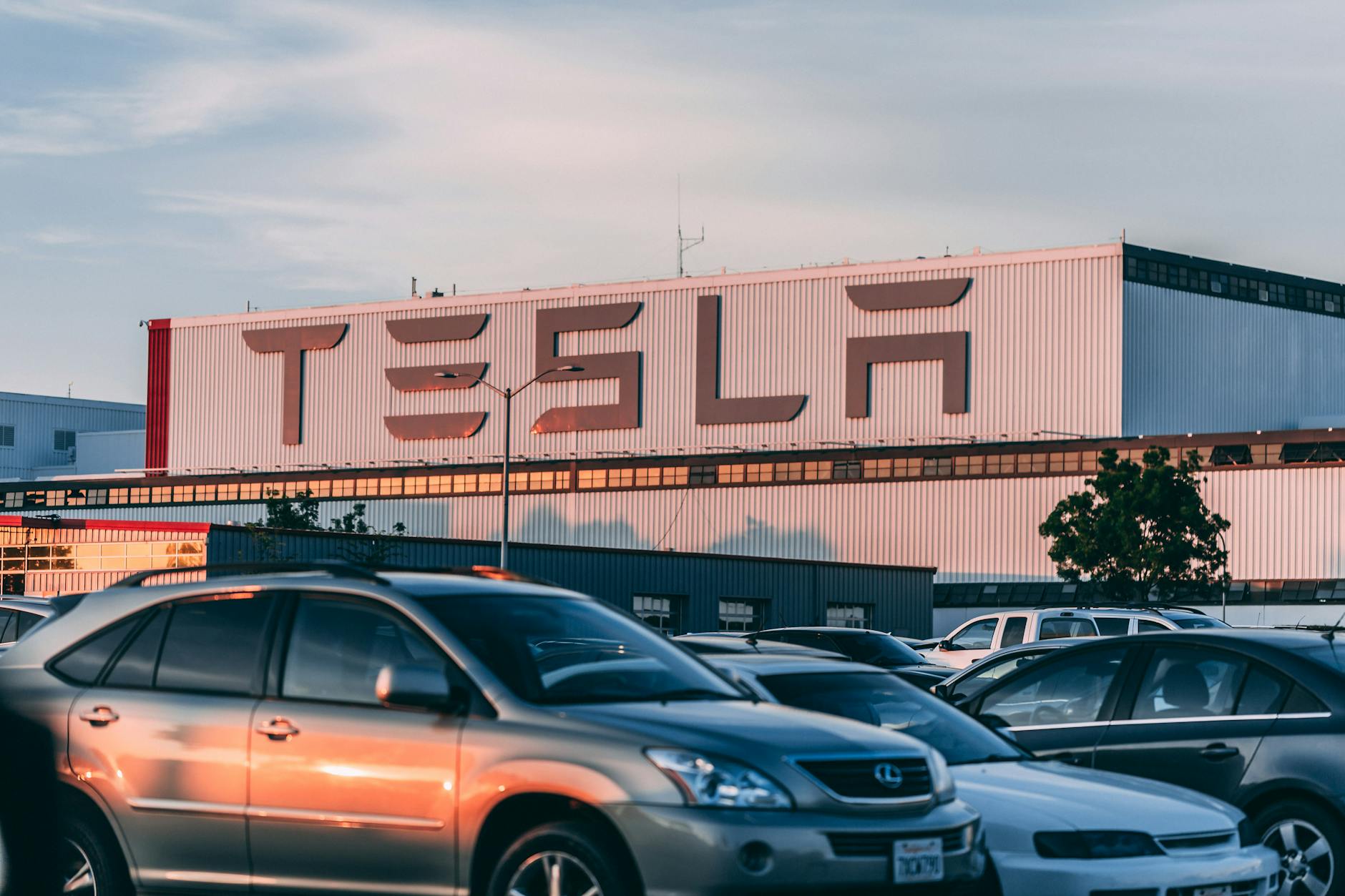 Photo by Craig Adderley / Pexels
The Oil Paradox That’s Fooling Everyone
Here’s where it gets interesting. Oil prices spiked, as they should. Amazon’s adding fuel surcharges, as they must. But the broader market? It’s acting like this is temporary noise, not a fundamental shift.
I think they’re right, and here’s why.
The 1973 oil embargo sent the S&P 500 down 17% and triggered a recession that lasted 16 months. The 1979 Iranian Revolution pushed crude from $15 to $39 and helped create the stagflation nightmare of the early 1980s. But 2026 isn’t 1973 or 1979. The U.S. is now the world’s largest oil producer, pumping over 13 million barrels a day. We’ve got strategic reserves, alternative supply routes, and — most importantly — a market that’s been stress-testing energy disruptions for two years since Russia went sideways in 2024.
The market’s betting this resolves faster than the pessimists think. Iranian hardliners know they can’t keep Hormuz closed indefinitely without triggering regime change from within. The economic squeeze works both ways, and Tehran’s running out of friends willing to subsidize their geopolitical theater.
My read? This oil spike peaks by May, maybe June. The real money is being made by investors who see through the headlines to the underlying resilience story.
Stock Pickers Are Having a Field Day
While everyone’s wringing their hands over macro headlines, individual stocks are telling completely different stories. Take Entegris, up 22.6% to $118.71 while the S&P 500 sits 2.8% lower since October 2025. This isn’t luck — it’s what happens when companies with solid fundamentals get thrown into the same basket as the genuinely vulnerable.
Expedia’s another case study. Trading at $228.13, up 4.8% over six months while beating the broader market by over 7 percentage points. Travel stocks should be getting crushed right now with oil prices spiking and geopolitical uncertainty. Instead, investors are betting that leisure travel demand is structurally different post-pandemic. They’re probably right.
This is the kind of environment where stock picking matters again. The correlation trade that dominated markets from 2020-2024 is breaking down. When everything moved together, you could ride index funds and call it strategy. Now you actually have to think about individual business models.
 Photo by Markus Spiske / Pexels
Tesla’s Reality Check Arrives Right on Schedule
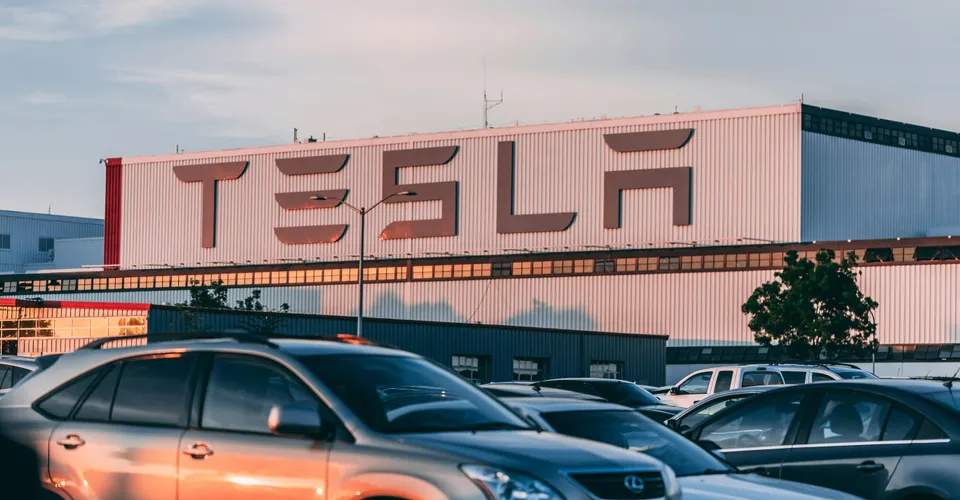
Then there’s Tesla, which managed to find a way to disappoint investors even in a week where oil companies are printing money. Back-to-back delivery misses will do that to a stock, especially one trading on growth expectations that would make a startup blush.
Tesla’s stumble isn’t really about the delivery numbers, though those matter. It’s about the collision between Elon Musk’s artificial intelligence promises and the grinding reality of manufacturing cars at scale. The company’s been positioning itself as an AI play for two years now, but investors are starting to ask inconvenient questions about when that translates into actual revenue.
I’ve seen this movie before. In 1999, every company was suddenly an “internet play.” In 2007, everything was “financial innovation.” In 2021, we had SPACs and NFTs. Now it’s AI, and Tesla’s discovering that slapping “artificial intelligence” on your investor presentations doesn’t automatically justify a 40x P/E ratio when you can’t hit your delivery targets.
The energy transition is real, but Tesla’s not the only game in town anymore. Ford’s lightning pickup actually works. GM’s throwing real money at electric infrastructure. Chinese manufacturers are eating Tesla’s lunch in the world’s largest EV market. Competition was always going to arrive eventually.
The Jobs Report That Could Change Everything
Friday’s jobs report is going to matter more than usual, and not for the reasons most people think. The consensus calls for 59,000 jobs added in March with unemployment holding at 4.4%. Those are decent numbers in normal times.
But these aren’t normal times.
We’re five weeks into an oil shock, inflation’s creeping back into conversations, and the Federal Reserve’s been making nervous noises about policy flexibility. A weak jobs number gives them cover to pause rate hikes. A strong number forces their hand on the hawkish side.
Here’s what I’m really watching: wage growth and labor force participation. If wages are accelerating while participation stays flat, we’ve got a problem. That’s the recipe for wage-price spirals that turn temporary oil shocks into permanent inflation problems. The Fed learned this lesson the hard way in the 1970s, and they won’t make the same mistake twice.
A soft landing requires wage growth that matches productivity gains, not wage growth that chases energy prices higher. The difference between 3.2% and 4.1% wage growth could determine whether this oil shock stays contained or becomes something much uglier.
Political Theater Meets Market Reality
President Trump’s decision to fire Attorney General Pam Bondi adds another layer of uncertainty that markets are trying to price in. Political instability usually translates into market volatility, but investors seem more focused on policy continuity than personnel drama.
The calculation is straightforward: Trump’s core economic policies haven’t changed. Deregulation, tax cuts, and energy independence remain the priorities. Bondi’s departure is being read as political housekeeping, not a signal of broader policy shifts.
Still, there’s an underlying fragility here that’s worth noting. Political capital gets spent on fights like this, and political capital is what you need to navigate international crises like Iran. Markets hate uncertainty, and uncertainty is what you get when your attention is divided between foreign wars and domestic investigations.
Crypto’s Quiet Legitimacy Play
Lost in all the oil and Tesla drama is Coinbase’s conditional approval to operate as a trust bank. This isn’t a headline that moves markets in the short term, but it’s exactly the kind of regulatory normalization that crypto has needed for years.
Banking regulators don’t hand out trust licenses to companies they consider existential threats to the financial system. This approval signals that digital assets are moving from “wild west” to “regulated utility” status. That transition creates opportunities for institutional adoption that simply didn’t exist before.
I’m not calling crypto a safe haven — nothing trading at Bitcoin’s volatility deserves that label — but the infrastructure for mainstream adoption is finally being built by people who understand both technology and compliance. That’s a longer-term positive that gets overshadowed by daily price swings.
Photo by Markus Spiske / Pexels
The Resilience Trade Is Just Getting Started
What ties all this together is a market that’s learning to price in resilience rather than just react to headlines. The pandemic taught investors that supply chains break, but they also get rebuilt better. The 2022 inflation spike taught us that central banks still have tools, even if they’re blunt instruments. The 2024 European energy crisis showed that alternatives exist when necessity forces innovation.
Now we’re stress-testing that resilience again with the Iran situation, and so far, the system’s holding. Oil prices spike, but strategic reserves get released. Supply chains get disrupted, but alternative routes open up. Companies add surcharges, but consumers keep spending because employment stays strong.
This isn’t permanent, and it’s not risk-free. Push any system hard enough and it breaks. But the break point is higher than most people think, and that gap between perception and reality is where money gets made.
The companies that survive and thrive in this environment are the ones building anti-fragile business models. They don’t just weather disruptions — they get stronger because of them. Entegris is benefiting from semiconductor supply chain reshoring. Expedia’s gaining from pent-up travel demand. Even Coinbase is turning regulatory scrutiny into competitive advantage.
Why This Time Really Is Different
I hate that phrase as much as anyone who lived through the dot-com bubble and the housing crisis. But sometimes, structural changes actually do change the structure.
The U.S. energy independence story is real. We went from importing 60% of our oil in 2008 to being a net exporter today. That’s not financial engineering or accounting tricks — that’s actual barrels coming out of actual ground on American soil.
The supply chain resilience story is real too. Companies spent three years and trillions of dollars rebuilding logistics networks after the pandemic exposed every weak link. Those investments are paying dividends now when we need them most.
The technological adaptation story is also real. When oil hits $120, electric vehicle adoption accelerates. When logistics costs spike, automation investments get fast-tracked. When geopolitical risks rise, domestic manufacturing becomes economically viable again.
None of this makes oil shocks painless, but it does make them survivable in ways that weren’t true in previous decades.
What Happens Next
The next six weeks will tell us whether this resilience narrative holds or whether we’re just postponing the inevitable reckoning. Iran can’t keep Hormuz closed indefinitely, but “indefinitely” could still be long enough to cause real economic damage.
The key trigger will be Chinese involvement. Beijing’s been conspicuously quiet about the Iran situation, which suggests they’re waiting to see how it plays out before choosing sides. If China decides to actively support Iran’s position, this becomes a much bigger problem. If they stay neutral or quietly pressure Tehran to reopen shipping lanes, the crisis resolves by summer.
My bet is on resolution, not escalation. The economic incentives are too strong on all sides, and even authoritarian regimes eventually have to deal with economic reality.
The market’s telling us the same story. It’s not ignoring the risks — oil prices and sector rotation patterns show investors are hedging appropriately. But it’s not panicking either, because the underlying fundamentals suggest this is manageable.
That could change fast if the jobs report shows underlying economic weakness, or if Iran decides to escalate further, or if China picks the wrong side. But right now, the base case is continued resilience with opportunities for stock pickers who can separate signal from noise.
What I’m Watching
- April 5 jobs report wage growth: Anything above 4% year-over-year changes the Fed calculus completely and turns this oil shock into an inflation problem
- Brent crude at $130: If oil breaks above this level and stays there for more than 48 hours, the resilience narrative breaks down and recession risks spike dramatically
- China’s Iran diplomacy by April 15: Beijing has stayed remarkably quiet — any signal they’re backing Tehran’s Hormuz strategy turns this from a regional crisis into a global economic war
- Tesla delivery guidance for Q2: If they cut guidance again after back-to-back misses, the AI premium evaporates and we find out what the car company is actually worth