Your Router Is Already Compromised—And That's Just the Warm-Up
The security breaches hitting critical infrastructure, GPUs, and encryption aren't separate incidents. They're a coordinated wake-up call that your defenses are built on sand.
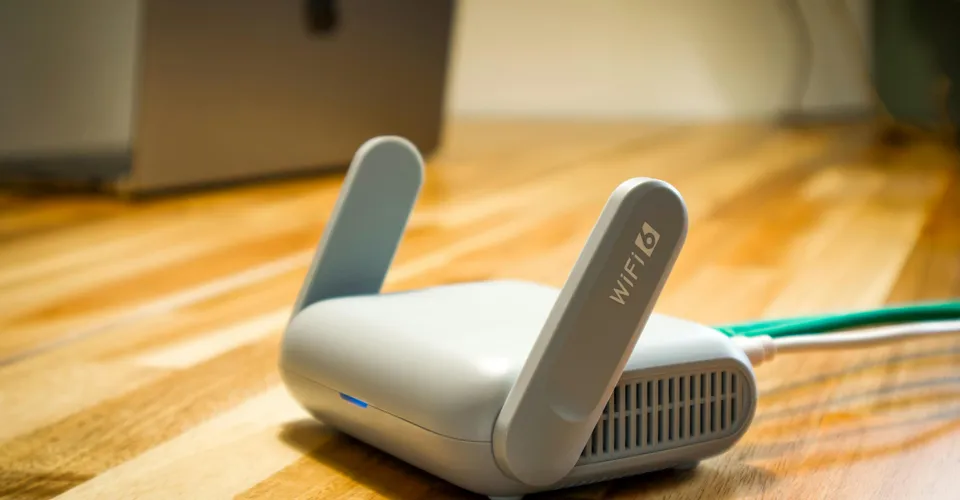
Russia’s military just hacked thousands of consumer routers. Iran-linked groups are actively disrupting US critical infrastructure. And researchers have figured out how to completely own Nvidia GPUs through a hardware flaw that costs almost nothing to exploit.
These aren’t separate news cycles. They’re the same story told three different ways.
The Infrastructure Is Breaking Now
Let’s start with what’s actually happening on the ground. Iran-linked hackers have disrupted operations at US critical infrastructure sites. Not theoretically. Not in a simulation. Right now. We don’t have full details on scope or damage, but the fact that this is worth reporting means it cleared a pretty high bar for significance.
Meanwhile, Russia’s military compromised thousands of consumer routers. Not enterprise-grade equipment with six-figure price tags and security teams watching them 24/7. Consumer routers. The kind your mom uses. The kind that run firmware from 2019 and haven’t been patched since the Obama administration.
Here’s what kills me: these aren’t new attack vectors. They’re the oldest ones in the book, just finally scaling to the point where nation-states don’t need to be surgical anymore. They can just… do it. Turn the screws on enough of them at once and something breaks.
A hacker also stole £700,000 from a U.K. energy company by redirecting a contractor payment to a bank account they controlled. No zero-days needed. No quantum computers. Just social engineering and wire fraud. The company trusted the wrong email address.
 Photo by Pascal 📷 / Pexels
The Hardware Is Betraying You
This is where it gets genuinely grim.
Researchers have found that Rowhammer attacks—exploiting a decades-old quirk in how DRAM works—can now give complete control of machines running Nvidia GPUs. Complete control. We’re talking about the chips powering AI inference clusters, data centers, crypto miners, and financial trading systems.
Rowhammer’s been around since 2014. That’s twelve years of knowing about this and apparently not fixing it at scale. And now it works against Nvidia chips specifically, which means it works against a significant chunk of the infrastructure we’re building our entire AI future on.
The attack doesn’t require admin access. Doesn’t require you to click a link. The attacker just needs to run code on the same machine—which, in cloud environments, is trivially easy if you’re a sophisticated adversary with a few bucks for compute time.
Think about what that means. A customer sharing a data center with your inference cluster can potentially own your GPU and, from there, potentially own your model weights, your training data, or both.
Quantum Is Coming Cheaper Than Expected
And then there’s the thing that should keep every CISO awake at night.
Quantum computers need vastly fewer resources than thought to break vital encryption. Not “eventually.” Not “theoretically.” The math is settled now. We need fewer qubits, less error correction, and less time than the consensus used to be.
This is the Y2K moment for cryptography. Except instead of clocks rolling over, it’s every encrypted secret anyone ever sent getting retroactively decrypted the moment someone builds a moderately sized quantum computer.
We’ve known this was coming. Governments and companies have known for years. And yet here we are in 2026, and I’d estimate fewer than 5% of critical systems have migrated to post-quantum cryptography.
Want to know what that means? Every classified email, every trade secret, every financial transaction, every healthcare record encrypted with RSA or ECC right now? It’s all being stored with the assumption that it’ll stay secret. But if you’re a nation-state or a well-funded criminal operation, you’re already hoarding it, waiting for quantum to arrive. Then you decrypt everything at once.
This isn’t speculation. NIST has been telling us this for years. The timeline keeps getting shorter.
 Photo by UMA media / Pexels
Why These Aren’t Separate Problems
If you’re reading this and thinking “okay, but these are three different attack surfaces,” you’re missing the point.
The consumer router breach + the critical infrastructure breach + the Rowhammer GPU discovery + the quantum encryption timeline isn’t a list of discrete problems. It’s a portrait of a security architecture that was never designed for the threat model we actually face.
We built our digital infrastructure on the assumption that:
- Attackers would be resource-constrained
- Hardware wouldn’t betray us
- Encryption would hold for decades
- Firmware updates would actually happen
None of those are true anymore.
The consumer routers that Russia’s military hacked weren’t compromised because of some exotic zero-day. They got hit because they’re running old software that nobody patches. The critical infrastructure that Iran-linked groups disrupted probably has the same problem, maybe layered with some social engineering and weak credentials.
Rowhammer works because chip designers in the 1990s optimized for density and speed, not security. Nobody wanted to sacrifice gigahertz for some theoretical attack that required physical access anyway. Except it doesn’t require physical access anymore in virtualized environments, and suddenly that optimization is a loaded gun.
And quantum encryption breaking cheaper than expected just accelerates a timeline everyone knew was coming but nobody prioritized.
My read: we’re watching the moment when security stopped being something you could bolt on and became something you actually have to architect from the ground up. And we’re about fifteen years too late.
The Amazon Signal
There’s something worth noticing in Amazon CEO Andy Jassy’s recent shareholder letter, where he takes aim at Nvidia, Intel, Starlink, and others while defending $200 billion in capex.
He’s not defending it for security theater. He’s defending custom chips and custom infrastructure because that’s how you get out from under someone else’s supply chain vulnerabilities. Build your own stack. Control the whole thing.
That’s not a philosophical choice. That’s triage. When you’re running at Amazon’s scale, you realize that trusting third-party security is expensive enough that it’s sometimes cheaper to just build it yourself.
Most companies can’t do what Amazon does. But the smart ones are going to start thinking like it.
What I’m Watching
-
Rowhammer patches for Nvidia architecture by Q3 2026. The GPU vulnerability is too valuable for attackers to not use, and too obvious to hide for long. Watch for whether Nvidia releases mitigations at the firmware level or if this requires redesigns. If it’s the latter, we’re talking about years of vulnerable chips in the field.
-
Post-quantum cryptography adoption rates in critical infrastructure by end of 2026. NIST finished its standardization process. I’m betting fewer than 20% of federal agencies will have migrated by December. If I’m wrong and it’s above 40%, that’s actually a bullish signal. If I’m right, we’ve got a hardware time bomb ticking.
-
The first major incident where Rowhammer + cloud co-tenancy = stolen model weights. It’ll happen. The question is whether it’s a startup nobody’s heard of or something big enough that we’ll actually hear about it. Watch the security research community for proof-of-concepts against major cloud providers.
-
Consumer router exploit kits becoming commodified. Right now, Russia’s military is using these breaches. Give it six months and cybercrime groups will have packaged it up as a service. That’s when you’ll see the real volume attack—botnets, ransomware staging, DNS hijacking, payment redirection at scale.
The next breach that makes headlines won’t be interesting because of the attack. It’ll be interesting because of how obvious it was that it should’ve been prevented.